
 English
 русский
 Español
 Deutsch
 عربى
عربى
 0
0

Choose the Right Auto Shredder—And Say Goodbye to Document Leak Worries Forever
The bottom line: investing in the right auto shredder is one of the most cost-effective ways to protect sensitive information—for both households and businesses. Whether you're handling personal financial records or processing thousands of documents per day in a corporate environment, selecting a machine matched to your actual workload, security needs, and budget will eliminate document leak risk at its source. This guide walks you through everything you need to know—from security levels and sheet capacity to maintenance cycles and industrial-grade options—so you can make a confident, informed purchase.
Why Document Security Starts With the Right Shredder
Data breaches are not exclusive to the digital world. According to the Identity Theft Resource Center, over 15% of data breaches in recent years originated from physical document theft or improper disposal—a statistic that surprises many people who assume hackers and ransomware are the only threats to worry about. A discarded invoice, a forgotten contract, or an improperly disposed HR record can expose individuals and organizations to regulatory fines, identity theft, and reputational damage.
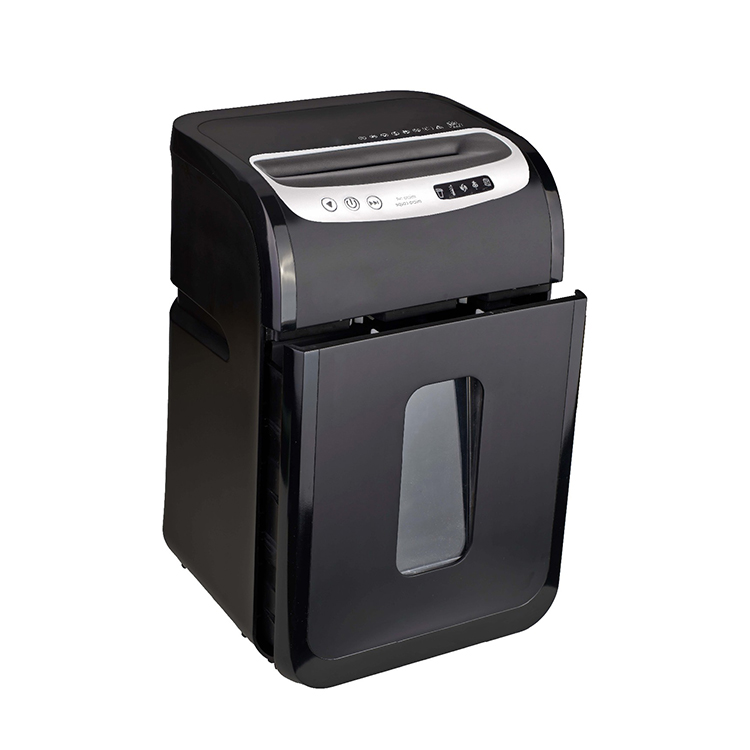
An auto shredder solves this problem at the source. Unlike traditional strip-cut shredders that require manual feeding and produce easily-reassembled ribbons of paper, modern auto shredders combine hands-free operation with micro-cut or cross-cut technology, rendering documents completely unreadable. The "auto" in auto shredder refers to auto-feed capability: you load a stack of documents, press a button, and the machine does the rest—no babysitting required.
The benefits extend beyond security. Teams that previously spent 20–30 minutes per week manually feeding shredders report reclaiming that time entirely after switching to an auto-feed model. At the enterprise level, a high speed shredder with an auto-feed hopper can process 500+ sheets unattended, transforming what was once a tedious chore into a fully automated background task.
Understanding Shredder Security Levels: DIN 66399 Explained
Not all shredders destroy documents equally. The international standard DIN 66399 classifies shredders into seven security levels (P-1 through P-7), and understanding where your needs fall on that spectrum is the single most important factor in choosing the right machine.
| Security Level | Cut Type | Particle Size | Recommended For |
|---|---|---|---|
| P-1 | Strip Cut | ≤ 2,000 mm² | General waste, non-sensitive |
| P-2 | Strip Cut | ≤ 800 mm² | Internal documents |
| P-3 | Cross Cut | ≤ 320 mm² | Personal data, HR files |
| P-4 | Cross Cut / Micro Cut | ≤ 160 mm² | Financial records, legal documents |
| P-5 | Micro Cut | ≤ 30 mm² | Confidential business data, medical |
| P-6 | Micro Cut | ≤ 10 mm² | Top-secret corporate, government |
| P-7 | Micro Cut | ≤ 5 mm² | Military, intelligence, highest classification |
For most small businesses and home offices, a P-4 micro-cut auto shredder strikes the ideal balance between security and throughput speed. Healthcare providers and legal firms handling HIPAA- or GDPR-regulated data should aim for P-5 minimum. Only government and defense entities typically require P-6 or P-7.
A common mistake is over-purchasing on security level while under-purchasing on capacity. A P-7 machine that jams every 20 sheets is functionally less secure than a reliable P-5 auto shredder that employees actually use consistently. Reliability and usability drive real-world security outcomes.
Auto Shredder vs. Manual Shredder: A Clear Comparison
The term "auto shredder" covers machines with automatic document feeding—meaning you don't need to stand over the machine feeding one sheet at a time. This distinction has profound practical consequences for productivity and compliance.
Key Differences at a Glance
| Feature | Manual Shredder | Auto Shredder |
|---|---|---|
| Feeding Method | 1–12 sheets at a time, manually | 50–500+ sheets loaded at once |
| Operator Attention Required | Constant | Minimal / None |
| Throughput (sheets/min) | 5–15 | 20–120+ |
| Jam Risk | Moderate (user error) | Low (auto-sensing mechanisms) |
| Handles Staples / Clips | Rarely | Usually Yes (model-dependent) |
| Average Price Range | $30–$200 | $150–$2,000+ |
| Best For | Light home use | Office, business, high-volume |
A household with occasional shredding needs—say, 10–20 documents per week—may find a basic manual cross-cut machine fully adequate. However, as soon as document volume climbs above 50 sheets per week, the productivity math strongly favors an auto shredder. At 100 sheets per week, the time savings from auto-feeding alone amount to roughly 2–3 hours per month—time that employees can redirect to more valuable tasks.
How to Choose the Right Auto Shredder for Your Needs
Choosing the right auto shredder involves evaluating five core criteria. Rushing past any one of them often leads to buyer's remorse—a machine that's too slow, too small, or too noisy for its environment.
1. Sheet Capacity of the Auto-Feed Hopper
The auto-feed hopper is the tray that holds your unshredded documents. Entry-level auto shredders typically hold 50–150 sheets; mid-range models handle 150–300; and premium or industrial-tier machines can accommodate 500 sheets or more per load. Match the hopper size to your daily volume. If your office generates 200 documents of shredding per day, a 100-sheet hopper means you'll need to reload frequently—negating much of the automation benefit.
2. Throughput Speed
Throughput is measured in sheets per minute (SPM). A standard office auto shredder delivers 20–40 SPM. A high speed shredder designed for heavy commercial use can reach 80–120+ SPM, capable of processing an entire ream of paper in under five minutes. If you routinely purge large batches—end-of-year financial archives, quarterly HR file cleanouts—a high speed shredder will dramatically cut processing time. For example, shredding 500 sheets at 20 SPM takes 25 minutes; at 100 SPM, the same job takes just 5 minutes.
3. Security Level vs. Speed Trade-Off
Higher security levels produce smaller particles, which requires more cutting energy and typically reduces throughput speed. A P-4 cross-cut auto shredder may run at 40 SPM, while a P-5 micro-cut model of the same price tier might deliver 25 SPM. Never sacrifice the required security level for speed—but do account for this trade-off when setting throughput expectations.
4. Media Compatibility
Modern auto shredders vary in what they can handle beyond standard paper. Look for the following capabilities if relevant to your use case:
- Staples and paper clips (prevents the need to remove fasteners before shredding)
- Credit cards and ID badges
- CDs and DVDs
- USB drives and small electronics (specialized industrial models only)
- Glossy paper, envelopes, and cardboard
Businesses that routinely destroy ID cards alongside paper documents should specifically verify credit card compatibility, as not all auto shredders support mixed-media destruction in the same pass.
5. Duty Cycle and Continuous Run Time
Duty cycle refers to how long a shredder can run before needing a cooldown period. Consumer-grade machines may only support 3–5 minutes of continuous operation before requiring a 20–30-minute rest. Office and commercial auto shredders are typically rated for 30–60 minutes of continuous use. Industrial shredders can run continuously without interruption. Exceeding the duty cycle is the leading cause of premature motor failure—always check this spec against your actual usage pattern.
Top Auto Shredder Categories and What to Expect From Each
The auto shredder market breaks down into three broad tiers, each suited to different user profiles. Understanding which tier fits your situation prevents both underspending (buying a machine that can't keep up) and overspending (paying for industrial capacity you'll never use).
Home Office Tier ($150–$350)
These machines are designed for individuals or very small teams shredding fewer than 200 sheets per week. Typical specs include a 50–100-sheet auto-feed hopper, P-3 or P-4 security, 20–30 SPM throughput, and a 5–10-minute duty cycle. They handle standard paper and usually credit cards, but staple tolerance is limited. Price-to-performance is strong, and most units are compact enough for a home office or a small reception area.
Representative example: a home-tier auto shredder with a 100-sheet hopper can process a typical month's personal financial mail—bank statements, utility bills, pre-approved credit card offers—in a single 4-minute session with zero operator involvement.
Small-to-Medium Business Tier ($350–$900)
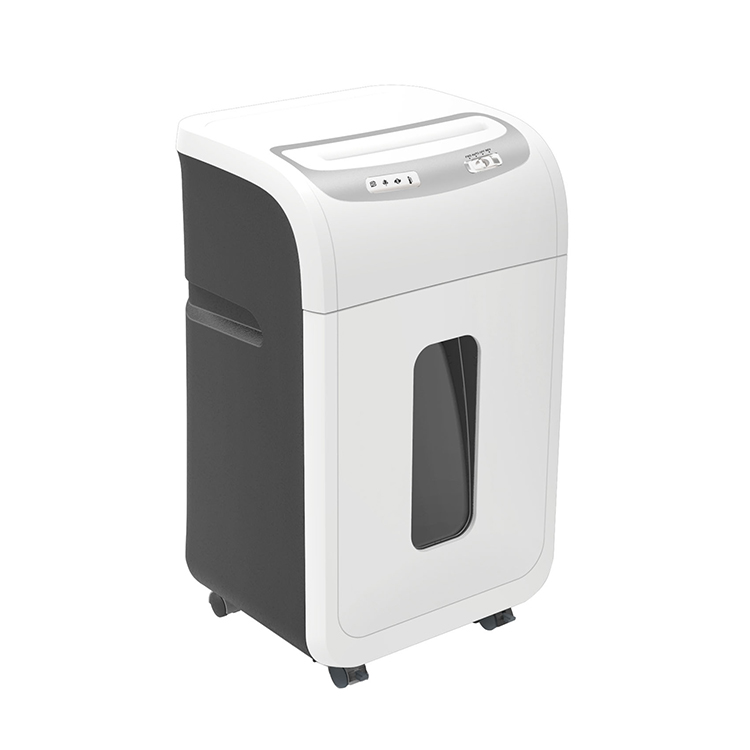
These are the workhorses of the auto shredder market. Built for teams of 5–25 people, they offer 150–300-sheet hoppers, P-4 or P-5 security, 40–80 SPM throughput, and 30–60-minute continuous duty cycles. Staple and paper clip handling is standard, and many models include a manual feed slot for odd-sized items. A high speed shredder in this category can process a full 500-sheet ream in 10 minutes or less—ideal for weekly document purges, post-meeting shredding, and routine compliance tasks.
This tier is where most businesses find the best return on investment. The incremental cost over a home-tier machine is usually recovered within the first quarter in time savings alone, particularly for businesses with GDPR, HIPAA, or PCI-DSS compliance obligations.
Industrial and Enterprise Tier ($900–$5,000+)
When you need to destroy thousands or tens of thousands of documents per day, you need the best industrial shredder your budget allows. The best industrial shredder models in this category offer 500+ sheet hoppers, continuous-duty motors, 100–150+ SPM throughput, and often integrate with document management systems or scheduled automation. Many are engineered for mixed-media destruction—paper, plastics, hard drives, and electronic media in the same machine.
Data centers, banks, hospitals, and government facilities routinely rely on the best industrial shredder solutions not just for security but for compliance documentation. Enterprise-grade units generate certified destruction logs per NIST 800-88 and NSA/CSS EPL standards, which are required by many regulatory frameworks.
High Speed Shredder Technology: What Makes Them Fast—and Reliable
A high speed shredder is not simply a standard machine running faster. High-throughput performance requires engineering across several subsystems simultaneously, and understanding these distinctions helps you evaluate marketing claims critically.
Motor and Cutting Mechanism Design
High speed shredder units typically employ oil-lubricated cutting heads with hardened steel blades rated for millions of cutting cycles. Consumer machines often use plastic or lower-grade steel cutters that dull quickly under sustained load. The motor in a high speed shredder is usually a commercial-grade induction motor rather than the universal motor found in budget machines—quieter, more efficient, and dramatically longer-lasting. A quality commercial cutting head can last 10–15 years under normal use, while a consumer-grade mechanism may degrade noticeably within 2–3 years of daily operation.
Auto-Feed Roller and Separation Technology
The key challenge in auto-feed design is reliably separating individual sheets from a stack and feeding them at consistent intervals without jamming. Premium auto shredder models use dual-roller separation with pressure-sensing feedback—the machine automatically adjusts feed rate based on paper weight and thickness. This prevents the common failure mode of cheaper auto-feed mechanisms: grabbing multiple sheets at once and jamming the cutting head.
Thermal Overload Protection and Jam Reversal
A well-engineered auto shredder includes both thermal overload protection (automatically pausing if the motor approaches dangerous temperatures) and automatic jam reversal (reversing the feed direction when resistance is detected before a jam becomes a blockage). These features are non-negotiable for any machine that will run unattended. Without them, an overloaded or jammed machine can cause motor burnout or—in extreme cases—become a fire risk.
Best Industrial Shredder Buying Guide: Specifications That Matter Most
For buyers in the market for the best industrial shredder their budget can support, the evaluation process requires looking beyond the marketing brochure and into the engineering specifications. The best industrial shredder for a government archive center looks very different from the best industrial shredder for a mid-sized accounting firm—but both categories share certain must-have attributes.
Certifications and Compliance Standards
Regulated industries must verify that their chosen auto shredder meets applicable standards. Key certifications include:
- DIN 66399 – The international benchmark for shredder security levels (P-1 through P-7)
- NSA/CSS EPL – Required for U.S. government classified document destruction
- NIST SP 800-88 – Guidelines for media sanitization, including paper records
- HIPAA and HITECH – Healthcare organizations must use P-4 minimum and maintain destruction records
- GDPR Article 5 – EU organizations must ensure "appropriate technical measures" for personal data disposal
Always request a certification sheet from the manufacturer before purchase. Reputable vendors selling the best industrial shredder products will provide this documentation without hesitation; evasive responses should raise red flags.
Waste Bin Capacity and Collection Systems
Industrial-volume shredding generates significant waste. The best industrial shredder models integrate with collection bags ranging from 20 gallons to 200+ gallons, and some connect directly to central vacuum or pneumatic waste conveyance systems. For operations shredding more than 10,000 sheets per day, bag-based collection quickly becomes impractical—look for machines with bulk bin or baler integration options.
Noise Level in Office Environments
This specification is frequently overlooked and frequently regretted. Consumer shredders often operate at 70–80 dB—comparable to a vacuum cleaner. Premium auto shredder units use sound-dampening enclosures and vibration-isolated motors to achieve 55–65 dB operation, making them genuinely usable in shared office spaces without disrupting calls or concentration. If the shredder will live in an open office, check the dB rating in the spec sheet before buying.
Maintenance Best Practices to Extend Your Auto Shredder's Lifespan
Even the best auto shredder will underperform or fail prematurely without proper maintenance. The good news: maintaining an auto shredder is straightforward, and most units require less than 15 minutes of maintenance per month.
Lubrication: The Single Most Important Maintenance Task
Cutting blades must be lubricated regularly to prevent heat buildup, reduce friction, and maintain cut quality. Most manufacturers recommend oiling the blades every time the waste bin is emptied, or at minimum once per week for high-volume use. Use only shredder-specific oil—never WD-40 or generic machine oil, which can damage plastic components and void warranties. Many modern auto shredder models include automatic oiling systems that dispense lubricant at preset intervals, eliminating user error from the equation.
What Not to Shred: Protecting Your Machine
Feeding incompatible materials is the fastest way to damage an auto shredder. Unless your machine explicitly supports them, avoid feeding:
- Wet or damp paper (causes blade corrosion and feed system blockages)
- Glossy laminated sheets thicker than the machine's rated capacity
- Binder clips, rubber bands, or large metal fasteners
- Cardboard heavier than the rated GSM (grams per square meter)
- Documents folded more than twice (creates uneven thickness that can jam auto-feed mechanisms)
Monthly Deep Cleaning
Paper dust accumulates in the cutting head, feed mechanism, and motor housing over time. Monthly cleaning with compressed air prevents this buildup from insulating the motor (causing heat issues) and gumming up the auto-feed rollers. For industrial units processing thousands of sheets daily, weekly cleaning may be more appropriate. Always unplug the machine before cleaning and follow the manufacturer's specific guidance for your model.
Common Auto Shredder Mistakes—And How to Avoid Them
Even experienced buyers make these errors. Recognizing them upfront saves money, frustration, and compliance risk.
- Buying for average volume, not peak volume. If your office shreds 100 sheets on a typical day but 500 sheets at month-end, size the machine for 500. A machine operating at maximum capacity daily will fail sooner and require more maintenance.
- Ignoring the warranty terms. Commercial auto shredder warranties vary enormously—from 1-year limited coverage on budget machines to 10-year full-parts warranties on premium units. Read the fine print before purchasing, particularly around what voids coverage (using non-approved oil, exceeding rated capacity, etc.).
- Purchasing without testing noise levels. A machine rated at 75 dB that will sit next to a reception desk is a liability. Whenever possible, test a floor model or request a decibel rating from the manufacturer in writing.
- Overlooking placement logistics. Industrial and commercial-tier auto shredder units can weigh 50–200+ lbs. Confirm the machine can be delivered to its intended location before purchase, and ensure adequate ventilation—shredder motors generate heat that accumulates in enclosed spaces.
- Failing to train staff on auto-feed limits. Even with an auto-feed hopper, overloading beyond the rated capacity—or failing to fan documents before loading—causes jams and premature wear. A 5-minute staff training session prevents most day-to-day operational issues.
Auto Shredder Total Cost of Ownership: Beyond the Sticker Price
The purchase price of an auto shredder is only one component of what you'll spend over the machine's lifetime. A comprehensive total cost of ownership (TCO) analysis considers consumables, energy, maintenance labor, and replacement frequency.
| Cost Component | Home Tier | SMB Tier | Industrial Tier |
|---|---|---|---|
| Purchase Price | $200 | $600 | $2,500 |
| Oil / Consumables (5 yr) | $50 | $100 | $300 |
| Energy Cost (5 yr) | $40 | $120 | $800 |
| Repairs / Service | $60 | $150 | $400 |
| Expected Lifespan | 3–5 years | 5–8 years | 10–15+ years |
| 5-Year TCO | ~$350 | ~$970 | ~$4,000 |
When amortized over a 5-year period, the daily cost of operating a commercial auto shredder is often less than $1—a trivial figure compared to the potential legal costs, regulatory fines, or reputational damage from a single data breach. GDPR fines alone can reach €20 million or 4% of global annual turnover; HIPAA violations carry penalties up to $1.9 million per category per year.
Conclusion: Make the Right Choice Once—and Protect Your Information for Years
The right auto shredder is not the cheapest one, the fastest one, or the one with the most impressive feature list. It's the one that reliably matches your volume, meets your regulatory security level, integrates into your workflow without friction, and performs consistently over time. Most buyers who do this analysis honestly find their ideal machine costs 20–30% more than their initial instinct—and report zero regret about the difference.
Start by estimating your weekly sheet volume. Select the appropriate DIN security level for your most sensitive documents. Size your hopper to handle your peak load, not your average. If throughput is a priority, invest in a high speed shredder with an oil-lubricated commercial cutting head. If you're managing an enterprise environment with daily high-volume destruction needs, research the best industrial shredder models in your budget range and verify certifications before committing.
Document security doesn't require complicated systems or large budgets. It requires the right auto shredder, used consistently, maintained properly. With that foundation in place, you can say goodbye to document leak worries—not just for now, but permanently.


-
 Kaifat Group, No.599, Qiming Road, Yinzhou Incubation, Ningbo, China
-
 +86-574-55665196
-
 [email protected]
