
 English
 русский
 Español
 Deutsch
 عربى
عربى
 0
0

Micro-Cut vs. Cross-Cut: Which Home Office Shredder Offers Better Privacy?
Content
- 1 I. Introduction
- 1.1 Background: The Rise of Remote Work and the Accumulation of Sensitive Information
- 1.2 The Core Conflict: Not All Shredders Provide the Same Level of Protection
- 1.3 Lead-In: Introduction to Cross-Cut and Micro-Cut Shredders
- 1.4 Which Shredder Offers Better Privacy?
- 1.5 Cross-Cut vs. Micro-Cut: The Privacy Battle
- 2 II. Technical Depth: The Science Behind the Scraps
- 3 III. Privacy Assessment: Which is Harder to Reassemble?
- 4 IV. Performance & User Experience: Beyond Security
- 5 V. Expert Buying Guide: Matching Need to Machine
- 6 FAQ: Frequently Asked Questions about Shredders
- 6.1 1. What is the difference between a cross-cut and a micro-cut shredder?
- 6.2 2. Which shredder should I buy for shredding junk mail and receipts?
- 6.3 3. Why is a micro-cut shredder better for professionals handling sensitive data?
- 6.4 4. Do cross-cut shredders offer enough security for personal financial documents?
- 6.5 5. What are the benefits of having a larger bin in a shredder?
- 6.6 6. How often do I need to maintain my shredder?
- 6.7 7. Are micro-cut shredders slower than cross-cut models?
- 6.8 8. What are the latest trends in shredding technology?
- 6.9 9. Is a higher-priced shredder always worth the investment?
- 7 References
I. Introduction
Background: The Rise of Remote Work and the Accumulation of Sensitive Information
In recent years, the world has seen a significant shift in the way people work, with remote work becoming more commonplace. As a result, more individuals are managing sensitive personal and business information from the comfort of their own homes. This information can range from everyday documents such as bills and contracts to even more confidential materials like shipping labels, legal documents, and financial statements.
With this influx of sensitive data, the need to dispose of these documents securely has become a crucial aspect of home office organization. People are no longer just dealing with discarded receipts or old notebooks—they’re managing materials that, if left exposed, could put them at risk of identity theft and fraud.
Despite the increasing need for better data security, many individuals still underestimate the importance of using a high-quality shredder to protect their sensitive information. Throwing documents in the trash or recycling bin without taking the necessary precautions is a dangerous habit, one that could leave personal or business data vulnerable to malicious actors.
The Core Conflict: Not All Shredders Provide the Same Level of Protection
As people become more aware of the need to protect their data, they face a pressing dilemma: how can they ensure that their shredder provides the best level of privacy and security? While many shredders claim to be capable of offering protection, the reality is that not all shredding machines are created equal. The differences between them can have serious implications for the privacy of the user.
Two of the most popular shredding methods on the market today are cross-cut and micro-cut. Both are designed to cut paper into smaller pieces, but their levels of security differ significantly. Cross-cut shredders are commonly used for home and office purposes, while micro-cut shredders are marketed as providing even greater protection.
The real question, then, is which of these two shredding methods is the “ultimate defense” against identity theft, and how can users decide which one is best suited for their needs?
Lead-In: Introduction to Cross-Cut and Micro-Cut Shredders
To answer this central question, it’s essential to understand the differences between cross-cut and micro-cut shredders. While both offer some level of security, they are distinct in terms of the size and shape of the paper fragments they produce. Let’s take a closer look at each type:
-
Cross-Cut Shredders: These shredders cut paper both horizontally and vertically, producing small, rectangular pieces. While this provides a level of security, the pieces may still be large enough for someone with malicious intent to piece together. Cross-cut shredders are generally more affordable and commonly used in home offices.
-
Micro-Cut Shredders: As the name suggests, micro-cut shredders go a step further by cutting the paper into even smaller, confetti-like pieces. This method offers a higher level of security because it is far more difficult to reconstruct a document from these tiny fragments. Micro-cut shredders are ideal for individuals who need to ensure the utmost privacy, particularly when dealing with sensitive business or financial information.
Which Shredder Offers Better Privacy?
To compare these two shredding methods more effectively, let’s break down their key features and benefits:
| Feature | Cross-Cut Shredders | Micro-Cut Shredders |
|---|---|---|
| Security Level | Moderate (small pieces) | High (confetti-like pieces) |
| Paper Fragment Size | Rectangular pieces (1/8" to 5/8") | Very small particles (<1/8") |
| Ideal Use | Home office, general documents | Sensitive financial data, high-risk documents |
| Price Range | Lower-cost options available | More expensive options |
| Speed | Faster shredding speeds | Slower shredding speeds |
| Volume of Paper | Handles larger volumes efficiently | Handles smaller volumes more securely |
Cross-Cut vs. Micro-Cut: The Privacy Battle
Security Level: A Deeper Look at Protection
When it comes to security, micro-cut shredders take the lead. Cross-cut shredders, though an improvement over traditional strip-cut models, still leave paper pieces that can be reconstructed under the right circumstances. For example, an identity thief with enough time and resources could piece together a cross-cut document by matching the rectangular fragments.
Micro-cut shredders, on the other hand, slice paper into tiny, almost unrecognizable pieces. Reconstructing these documents is nearly impossible, even with sophisticated technology. This makes micro-cut shredders the go-to choice for individuals who deal with highly sensitive data, such as personal identification numbers, credit card details, or legal documents.
Price and Affordability
One factor that often influences consumer choice is price. Cross-cut shredders are generally more affordable, making them an attractive option for those who are primarily concerned with basic document disposal. These shredders still provide an adequate level of protection for everyday paperwork, but they may not be sufficient for more sensitive materials.
Micro-cut shredders, while offering superior privacy, come with a higher price tag. This higher cost can be a deterrent for some, but the added security could be worth the investment, especially for individuals who need to protect sensitive information from identity theft.
Speed and Efficiency
In terms of speed, cross-cut shredders typically have the upper hand. Because they cut documents into larger pieces, they can process a higher volume of paper in less time. This makes them suitable for situations where speed is a priority, such as shredding old office files or high volumes of non-sensitive documents.
Micro-cut shredders, however, tend to be slower. The smaller paper fragments require more time to produce, which can lead to delays when shredding large quantities of documents. However, for users prioritizing privacy, the extra time may be a small price to pay for peace of mind.
II. Technical Depth: The Science Behind the Scraps
Cutting Principles & Visual Effects
Home Office Shredders use various cutting mechanisms to slice paper into smaller pieces, with the primary goal being to prevent unauthorized access to sensitive information. The effectiveness of a shredder largely depends on the type of cut it makes—whether it’s a simple strip cut, cross-cut, or more advanced micro-cut. Understanding how these cuts work and their visual effects is key to appreciating the differences between cross-cut and micro-cut shredders.
Cross-Cut Shredders (P-3/P-4)
Cross-cut shredders are designed to cut paper both horizontally and vertically, resulting in small rectangular pieces. This method is often classified into different security levels, such as P-3 and P-4, based on the size of the resulting particles. When an A4 sheet of paper is shredded in a cross-cut machine, the paper is typically divided into 300 to 400 small rectangular particles. These small pieces are harder to piece together than the long strips produced by a traditional strip-cut shredder. However, the individual rectangular pieces are still large enough that someone with malicious intent might be able to reassemble the document, especially if they have access to multiple pieces.
A P-3 cross-cut shredder offers a moderate level of security, making it suitable for general office use or for shredding less-sensitive documents like old bills and junk mail. However, its vulnerability lies in the fact that the pieces are still relatively large. Even with a P-4 cross-cut shredder, which creates slightly smaller pieces, the risk of reconstruction remains a concern for documents containing more confidential information.
Micro-Cut Shredders (P-5 and Above)
Micro-cut shredders take paper security to the next level by cutting the paper into tiny, confetti-like pieces. Unlike the rectangular particles produced by cross-cut shredders, the micro-cut shredders break the paper down into small, almost unrecognizable particles. In fact, one A4 sheet of paper shredded with a micro-cut shredder can yield anywhere between 2,000 and 3,700 tiny micro-particles. These small, shredded fragments are far more difficult to reconstruct than the larger pieces from a cross-cut shredder, even with sophisticated technology.
Micro-cut shredders are classified into security levels such as P-5 and P-6, which are the highest levels of security defined by the International Organization for Standardization (ISO). A P-5 micro-cut shredder offers a high degree of security for sensitive documents, such as tax returns, personal identification information, or business contracts. It ensures that even if a malicious actor manages to obtain a few fragments, the pieces will be too small and too numerous to piece together, making reconstruction virtually impossible.
A P-6 micro-cut shredder goes even further, creating even smaller fragments than P-5. While P-6 shredders are often used in high-security environments, such as government agencies or military settings, they offer unparalleled security for any document that requires the utmost confidentiality.
International Security Standards
One of the most important aspects of understanding the security of a shredder is the international standards that classify the effectiveness of different shredding methods. These standards, outlined by DIN 66399, provide clear guidelines for the security levels of shredders based on the size of the resulting particles. The DIN 66399 system categorizes paper shredders into several security levels, from P-1 to P-7, with each level offering a different level of protection.
DIN 66399 P-4 vs. P-5/P-6: A Comparison
The primary difference between P-4 and P-5/P-6 levels lies in the size of the resulting particles and the difficulty of reconstructing shredded documents. Let’s break it down:
| Security Level | Particle Size | Approx. Number of Particles per A4 Sheet | Reconstruction Difficulty | Ideal Use |
|---|---|---|---|---|
| P-4 (Cross-Cut) | 4mm x 30mm (Rectangular) | 300–400 pieces | Moderate—Reconstruction possible | General office use, shredding non-sensitive documents |
| P-5 (Micro-Cut) | 2mm x 15mm (Confetti-like) | 2,000–3,700 pieces | High—Almost impossible to reconstruct | Sensitive personal data, financial documents, business contracts |
| P-6 (Micro-Cut) | 1mm x 5mm (Ultra-small) | 4,000+ pieces | Very high—Virtually impossible to reconstruct | High-security environments, government or military use |
Understanding P-4 Security Level
A P-4 shredder is suitable for individuals and businesses that deal with moderately sensitive information. The particles are smaller than those produced by a strip-cut shredder, making it more difficult for someone to reassemble shredded documents. However, the rectangular nature of the cuts in a P-4 shredder means that, with enough pieces, it is still possible for an identity thief to reconstruct a document.
For example, a P-4 shredder would be appropriate for shredding documents such as old bills, promotional material, and low-risk business documents. However, for individuals who deal with more sensitive data (such as financial records or personally identifiable information), the P-4 security level may not provide enough protection.
Understanding P-5 and P-6 Security Levels
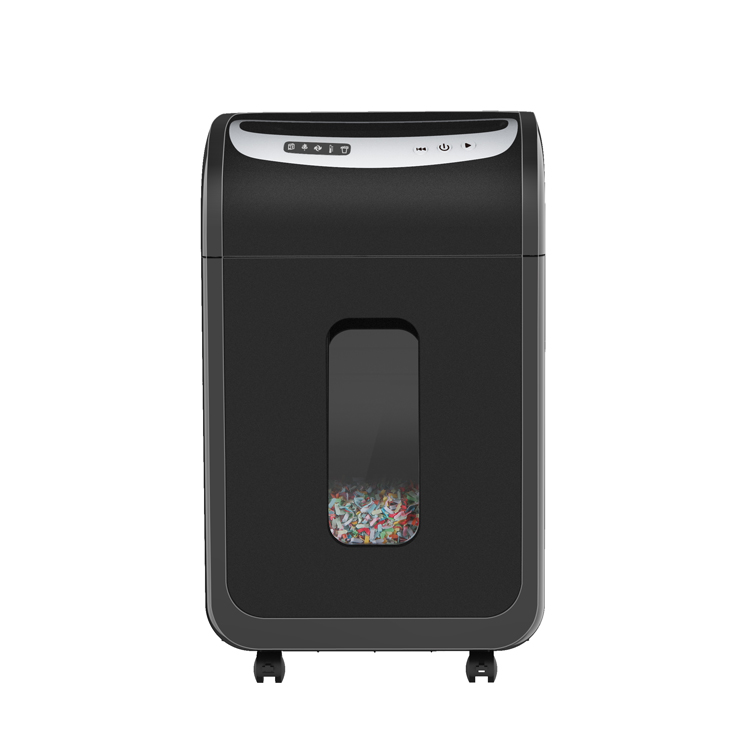
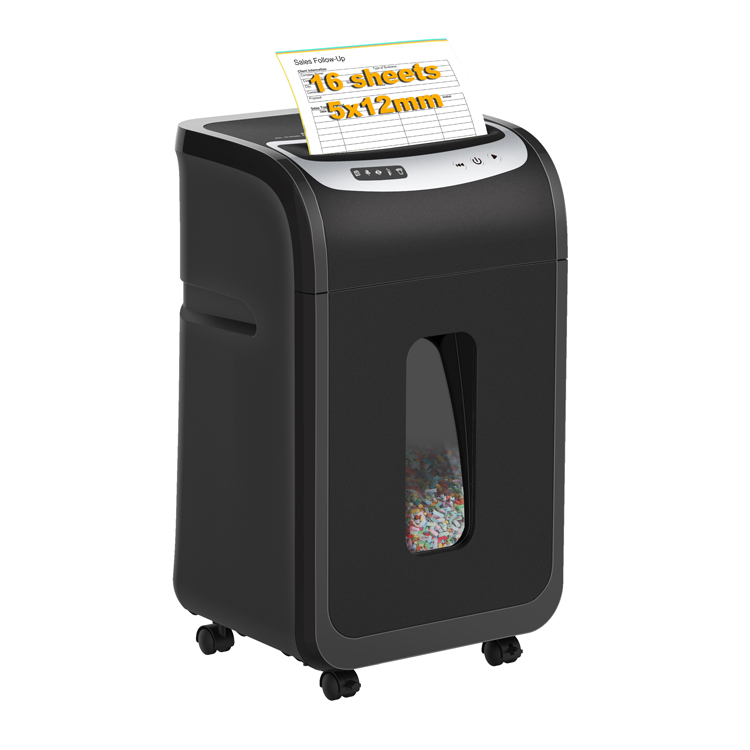
In contrast, the P-5 and P-6 security levels offer significantly higher levels of security. These shredders are designed to handle documents that require the highest levels of confidentiality. The P-5 micro-cut shredder reduces paper to tiny, confetti-like particles, while the P-6 shredder produces even smaller pieces, ensuring that the shredded material is nearly impossible to piece together, even with sophisticated technology.
The P-5 micro-cut shredder is ideal for people who need to protect sensitive financial data, personal identification information, or legal documents. A P-6 shredder, with its ultra-small particles, is typically used in government agencies, law enforcement, or military environments where the highest level of security is required.
For individuals or businesses that deal with highly confidential information on a daily basis, investing in a P-5 or P-6 shredder is the best choice to ensure that the shredded documents are securely destroyed, making it nearly impossible for anyone to reconstruct the documents.
III. Privacy Assessment: Which is Harder to Reassemble?
Reconstruction Analysis: How Easily Can Shredded Documents Be Reassembled?
One of the most significant concerns when it comes to shredding documents is how easily the pieces can be reassembled. The primary goal of using a shredder is to ensure that sensitive information is destroyed beyond recovery, rendering the document unreadable. To assess this, we must evaluate how different shredding methods—particularly cross-cut and micro-cut—affect the ease of document reconstruction.
Cross-Cut Shredders: Leftover Legible Fragments
Cross-cut shredders, which cut paper into small rectangular pieces, offer an improvement over traditional strip-cut shredders, but they still leave behind fragments that may contain legible portions of important information. For example, when you shred a page containing an account number, credit card details, or even a name, the resulting pieces are often small enough to hide individual characters. However, these fragments are not small enough to obscure the entire piece of information.
A typical A4 sheet shredded by a cross-cut shredder can be reduced into approximately 300 to 400 rectangular pieces. In many cases, these pieces are large enough for a determined individual to recover legible fragments, such as part of an account number or a person’s name. With enough pieces, someone might be able to piece together critical details from the document, potentially leading to identity theft, financial fraud, or the unauthorized access of confidential business information.
For example, if an A4 sheet with personal information is shredded into 350 pieces, it would only take a relatively small amount of time for a determined person to begin reconstructing the document. They could try to match the edges of the shredded pieces and decipher portions of the text that remain visible, especially if the paper contains high-contrast elements like black text on white paper. This makes cross-cut shredders a better option for general document disposal, but not the best solution for highly sensitive or confidential materials.
Micro-Cut Shredders: Eliminating the Possibility of Reconstruction
In contrast, micro-cut shredders are designed to cut paper into far smaller pieces—often creating tiny, confetti-like particles. A single A4 sheet shredded in a micro-cut shredder can yield up to 2,000 to 3,700 tiny pieces. These small particles make it nearly impossible for any person, manual or digital, to recover the original text or images.
The primary advantage of micro-cut shredders is that they reduce documents to such a small size that the risk of reconstruction is virtually eliminated. Even with the aid of technology, it would be exceedingly difficult for someone to reassemble a shredded document, particularly when dealing with documents shredded at the highest security levels, such as P-5 or P-6. The shredded pieces are so small and randomly fragmented that any attempt at reassembling a document would result in an insurmountable puzzle.
Micro-cut shredders use a finer cutting mechanism, creating particles that are often smaller than the characters printed on the page itself. This means that even if a portion of the shredded paper contains part of an account number, name, or other sensitive data, those characters will be destroyed beyond recognition, leaving no viable clues for anyone trying to reconstruct the document.
Legal & Compliance Requirements: Meeting Privacy and Security Standards
When it comes to privacy and data protection, different industries have varying levels of legal requirements for document disposal. These regulations often determine the type of shredder that businesses or individuals should use to comply with security standards.
Cross-Cut: Sufficient for Standard Household Bills
For most standard household documents, such as old bills, receipts, and other non-sensitive materials, a cross-cut shredder is typically sufficient. These documents usually do not contain critical personal or financial information that would cause significant harm if reconstructed. As such, the P-3 and P-4 security levels of cross-cut shredders are often considered adequate for meeting the needs of typical home users.
For example, if you are shredding outdated utility bills, promotional material, or non-confidential correspondence, a cross-cut shredder is an effective tool to reduce the risk of identity theft. It’s important to note that while cross-cut shredders do provide a moderate level of security, they are not recommended for highly sensitive data. Even a relatively basic level of personal information, such as a partial address or an old phone number, could potentially be reconstructed with the right fragments from cross-cut shredders.
Micro-Cut: The Standard for Highly Sensitive Documents
For highly sensitive materials, such as medical records, financial documents, or government-contracted files, micro-cut shredders are the standard for ensuring compliance with privacy regulations like GDPR (General Data Protection Regulation) and HIPAA (Health Insurance Portability and Accountability Act). These standards require that organizations take the utmost care when destroying sensitive data to prevent unauthorized access and ensure the privacy of individuals’ personal information.
GDPR and HIPAA both have strict requirements for data protection, and shredding is a key aspect of ensuring compliance. For example, under GDPR, businesses must implement measures to ensure that personal data is destroyed securely when it is no longer needed. Using a micro-cut shredder ensures that the destruction of such data is complete and irrecoverable, which is critical for protecting the privacy of individuals.
Similarly, HIPAA mandates that healthcare organizations take necessary steps to safeguard patient records, including secure destruction of physical documents. Micro-cut shredders that meet P-5 or P-6 standards provide the necessary level of protection for healthcare providers, making it almost impossible for anyone to reconstruct medical records, which are highly confidential and subject to strict legal safeguards.
Shredding Performance for Legal Documents
For legal professionals or those who work with legal contracts, government documents, or business agreements, shredding documents securely is not just a matter of privacy—it is also about legal compliance. Some legal requirements mandate that certain records, such as contracts and client information, be destroyed in a manner that prevents their recovery. Micro-cut shredders are essential for meeting these needs because of their high level of security.
| Document Type | Recommended Shredding Method | Security Level |
|---|---|---|
| Standard Household Bills | Cross-Cut (P-3/P-4) | Moderate |
| Medical Records | Micro-Cut (P-5/P-6) | High |
| Financial Statements | Micro-Cut (P-5/P-6) | High |
| Government Contract Documents | Micro-Cut (P-5/P-6) | High |
| Legal Contracts | Micro-Cut (P-5/P-6) | High |
IV. Performance & User Experience: Beyond Security
While security is the primary concern when choosing a shredder, factors such as bin capacity, operational efficiency, price, and maintenance requirements also play a significant role in the overall user experience. Understanding how these elements differ between cross-cut and micro-cut shredders can help consumers make more informed decisions based on their specific needs and use cases.
Bin Capacity Efficiency: How Much Paper Can Each Shredder Hold?
One important consideration when selecting a shredder is the bin capacity. The bin is where the shredded paper is collected, and its size determines how often you’ll need to empty it. The efficiency with which paper is shredded and packed into the bin can vary significantly between cross-cut and micro-cut models.
Cross-Cut Shredders: More Frequent Emptying
Cross-cut shredders generally produce larger paper fragments—typically rectangular pieces. These larger pieces don’t pack as densely in the shredder’s bin, meaning the bin fills up more quickly. As a result, users may need to empty the bin more frequently, especially if they are dealing with a high volume of paper. While the precise bin capacity varies depending on the model, you can generally expect the bin to hold between 8 to 20 liters of shredded paper.
In a typical home office or small business environment, this means you’ll likely need to empty the bin after a few uses, especially if you are shredding a lot of documents. Cross-cut shredders, however, do tend to handle paper faster, meaning the process of shredding is generally more efficient in terms of time, even if it requires more frequent emptying.
Micro-Cut Shredders: Greater Bin Efficiency
Micro-cut shredders are designed to produce smaller, confetti-like pieces of paper. These tiny fragments pack more densely in the shredder’s bin, allowing the same bin size to hold more shredded material. On average, a micro-cut shredder can hold 2 to 4 times more paper than a cross-cut shredder before needing to be emptied. This makes micro-cut shredders a better option for users who need to shred a large volume of paper on a regular basis or for those who prefer fewer interruptions to empty the bin.
For instance, a micro-cut shredder’s bin, with its more compactly packed paper, may be able to hold 20 to 40 liters of shredded paper, depending on the model. As a result, you’ll spend less time emptying the bin, which can enhance the overall user experience, particularly in environments where efficiency is key, such as busy offices.
Operational Efficiency: Speed and Load Handling
The operational efficiency of a shredder isn’t just about how much paper it can handle at once; it’s also about how quickly it can do so and how well it performs under continuous use.
Cross-Cut Shredders: Faster and More Capable of Handling Higher Volumes
Cross-cut shredders typically have faster feed speeds than micro-cut shredders, allowing them to shred a higher volume of paper per minute. The larger paper fragments produced by cross-cut shredders mean that the shredder’s motors don’t have to work as hard to slice the paper, leading to less wear and tear on the machine and the ability to shred more sheets per pass.
Many cross-cut shredders are capable of handling larger sheet capacities per pass, with some models able to shred up to 20 sheets of paper at a time. This high throughput is particularly useful in environments where time efficiency is important, such as when shredding a large amount of non-sensitive paperwork.
However, the downside to cross-cut shredders’ higher feed speeds and larger sheet capacities is that they are less capable of handling heavy, continuous use. For instance, if a cross-cut shredder is used for long periods without breaks, its motor could overheat or its components could wear out more quickly compared to micro-cut shredders, which are built for higher load endurance.
Micro-Cut Shredders: Slower but More Resilient
Micro-cut shredders, while slower than cross-cut models, have the advantage of being able to handle more intense, heavy-duty shredding tasks. The smaller pieces of paper produced by micro-cut shredders require more power and effort from the motor, meaning these machines are typically built with stronger motors that can endure higher loads. However, this increased load handling comes at a price: micro-cut shredders often require longer cooling periods.
Micro-cut models tend to have lower sheet capacities per pass, with many models shredding between 6 to 10 sheets of paper at once, depending on the machine’s design. While this means micro-cut shredders are slower and may take more time to process large volumes of paper, they are generally more durable and can be used for longer periods of time compared to their cross-cut counterparts.
Additionally, many micro-cut shredders have built-in cooling mechanisms to prevent overheating, although the need for these cooling breaks may make them less ideal for environments that require constant shredding without pauses.
Price & Maintenance: Cost Considerations and Upkeep
When comparing cross-cut and micro-cut shredders, the price point and maintenance requirements are two crucial factors that influence the long-term value of the machine.
Cross-Cut Shredders: More Affordable, Lower Maintenance Costs
One of the key benefits of cross-cut shredders is their affordability. Because cross-cut shredders are generally less complex to build and operate, they tend to have lower price points, making them a more budget-friendly option for home offices and small businesses. Basic cross-cut models can be found at lower prices, and they typically come with a range of features like jam prevention, automatic shut-off, and varying bin sizes.
In terms of maintenance, cross-cut shredders usually require less upkeep compared to micro-cut shredders. While users still need to regularly empty the bin and oil the cutters to maintain performance, the maintenance requirements are generally straightforward and less frequent. Because the cutters don’t work as hard (due to the larger particle size), there is less stress placed on the motor and cutting blades, which means fewer maintenance issues over time.
Micro-Cut Shredders: Higher Upfront Costs and More Frequent Maintenance
While micro-cut shredders offer superior security, they come with a higher price tag. Micro-cut models are typically more expensive than their cross-cut counterparts, especially those that offer higher security ratings (P-5 or P-6). For individuals or businesses that need maximum privacy and data destruction capabilities, the higher cost is often justified, but it can still be a consideration for budget-conscious buyers.
The more complex mechanisms required to create the smaller particles in a micro-cut shredder also result in more frequent maintenance needs. Micro-cut shredders require regular oiling of the cutters to prevent them from becoming dull or clogged. This oiling process is critical for ensuring the longevity and optimal performance of the shredder. Users may also need to replace the cutters or motor components more often due to the higher demands placed on the machine.
| Feature | Cross-Cut Shredders | Micro-Cut Shredders |
|---|---|---|
| Bin Capacity | Smaller, needs frequent emptying | Larger, holds 2–4 times more paper |
| Speed | Faster shredding, higher sheet capacity | Slower shredding, lower sheet capacity |
| Price | More affordable | More expensive |
| Maintenance | Lower maintenance requirements | More frequent maintenance required |
| Cooling Time | Less frequent cooling required | Longer cooling periods |
| Durability | Suitable for shorter, less intensive use | Built for longer, more intensive use |
V. Expert Buying Guide: Matching Need to Machine
Choosing the right shredder is more than just about security; it’s about finding a machine that aligns with your specific needs, whether you’re a general household user, a freelancer, or a financial professional handling sensitive documents.
Scenario A: General Household User — Cost-Effective P-4 Cross-Cut
Who Should Consider a Cross-Cut Shredder?
For most general household users, the primary purpose of a shredder is to dispose of non-sensitive documents like junk mail, labels, old receipts, and expired promotional materials. While these documents may contain personal information, they don’t usually carry sensitive financial or medical data that could lead to identity theft if accessed. In such cases, a cross-cut shredder with a P-4 security rating is typically sufficient to provide the necessary privacy.
A P-4 cross-cut shredder cuts paper into smaller rectangular pieces, which makes it much harder to piece together documents compared to strip-cut shredders. Cross-cut models at the P-4 level offer a good balance between security and affordability, making them an ideal choice for home offices or general household use. These shredders are also generally fast and capable of handling moderate volumes of paper, which is perfect for dealing with junk mail and documents that don’t require the highest level of security.
Benefits of P-4 Cross-Cut Shredders for Household Use
-
Affordable Price Point: Cross-cut shredders, especially those rated P-4, are generally more affordable compared to micro-cut models. This makes them a budget-friendly choice for users who only need to shred everyday documents.
-
Moderate Security: The P-4 security level offers moderate protection for everyday documents. While not as secure as micro-cut shredders, P-4 provides enough security for personal documents like old bills and mail.
-
User-Friendly: Cross-cut shredders are typically faster and more efficient when it comes to shredding large volumes of paper. For households with moderate shredding needs, a cross-cut model will get the job done without the need for frequent maintenance.
-
Low Maintenance: Cross-cut shredders generally require less maintenance than micro-cut models. They are less likely to jam or overheat, making them easy to use for those who prefer a no-fuss machine.
Recommended Features for Household Use:
- Sheet Capacity: Look for a shredder that can handle 8–12 sheets of paper per pass, which is suitable for moderate shredding needs.
- Bin Capacity: Opt for a bin with at least 10 liters of capacity, so you don’t have to empty it too often.
- Anti-Jam Technology: Even basic models can benefit from anti-jam sensors to prevent paper from getting stuck.
| Feature | P-4 Cross-Cut Shredder |
|---|---|
| Security Level | Moderate (P-4) |
| Price Range | Budget-friendly |
| Sheet Capacity | 8–12 sheets per pass |
| Bin Capacity | 10–15 liters |
| Maintenance | Low maintenance |
| Ideal Use | Shredding junk mail, receipts, and non-sensitive documents |
Scenario B: Freelancers/Financial Professionals — High-Security P-5 Micro-Cut
Who Should Consider a Micro-Cut Shredder?
For freelancers, financial professionals, or anyone handling confidential documents like contracts, financial reports, tax returns, or client information, the need for higher security is paramount. In these cases, a P-5 micro-cut shredder is the best option, as it offers superior protection against identity theft, fraud, and the unauthorized access of sensitive data.
Micro-cut shredders provide the highest level of security, reducing documents into tiny, confetti-like particles that are virtually impossible to reconstruct. For professionals dealing with sensitive personal and business data, such as accountants, financial planners, or legal consultants, a P-5 micro-cut shredder ensures that confidential information is securely destroyed.
Benefits of P-5 Micro-Cut Shredders for Professionals
-
Unmatched Security: The P-5 security level ensures that documents are shredded into particles smaller than 2mm x 15mm. This makes it virtually impossible to reconstruct shredded documents, providing the highest level of protection for sensitive financial, legal, or medical information.
-
Compliance with Regulations: Professionals working in regulated industries, such as finance, healthcare, or law, often need to comply with strict data protection regulations such as GDPR or HIPAA. Micro-cut shredders meet these requirements, ensuring the safe disposal of confidential client information and helping businesses stay compliant.
-
Durability and Long Run Times: Micro-cut shredders are designed for higher workloads and are built to handle continuous shredding for longer periods. While they are slower than cross-cut models, their durability makes them ideal for high-security environments where multiple shredding sessions are required.
-
Higher Bin Capacity: Given the finer particles they produce, micro-cut shredders tend to have larger bins, meaning they can hold more paper before needing to be emptied. This feature is especially valuable for professionals who deal with large volumes of paper on a regular basis.
Recommended Features for Professional Use:
- Security Level: A minimum of P-5 security for highly sensitive documents.
- Sheet Capacity: A sheet capacity of 6–8 sheets per pass is suitable for professional use, ensuring high security without excessive paper load.
- Continuous Run Time: Choose a shredder with longer continuous run times to avoid overheating during extended use.
- Bin Size: A larger bin (20 liters or more) is ideal for professional environments to reduce interruptions.
| Feature | P-5 Micro-Cut Shredder |
|---|---|
| Security Level | High (P-5) |
| Price Range | Higher-end |
| Sheet Capacity | 6–8 sheets per pass |
| Bin Capacity | 20–40 liters |
| Maintenance | Regular oiling and occasional cutter replacement |
| Ideal Use | Shredding contracts, financial reports, and highly sensitive client data |
2026 Buying Trends: Look for Safety Sensors, Anti-Jam Technology, and Ultra-Quiet Performance
As the shredder market continues to evolve, there are several emerging trends in shredder technology that consumers should be aware of when making their purchase decisions. These innovations not only enhance the performance of shredders but also improve safety and user experience.
1. Safety Sensors
Modern shredders are equipped with advanced safety sensors that detect when hands or foreign objects are near the blades. These sensors automatically stop the shredder to prevent accidents, which is especially useful for households with children or busy offices. Some models also feature automatic shut-off functions when the bin is full, ensuring safe operation at all times.
2. Anti-Jam Technology
One of the most common frustrations with shredders is paper jams. However, many new shredders come with anti-jam technology that detects and prevents paper from becoming stuck in the feed. If a jam is detected, the shredder will reverse the paper, ensuring smooth operation without the need for manual intervention.
3. Ultra-Quiet Performance
Shredding paper can be a noisy task, especially in offices where many people are working in close quarters. To address this issue, many 2026 shredders feature ultra-quiet performance technology, allowing users to shred documents without disturbing others. These shredders are designed with noise-reducing mechanisms that make them significantly quieter, making them perfect for shared office spaces or home offices.
FAQ: Frequently Asked Questions about Shredders
1. What is the difference between a cross-cut and a micro-cut shredder?
- Cross-Cut Shredders: These shred paper into small rectangular pieces. While they provide a moderate level of security, the pieces are still large enough to be reconstructed by a determined person. Cross-cut shredders are suitable for general household use and non-sensitive documents like junk mail and old receipts.
- Micro-Cut Shredders: These create tiny, confetti-like particles that make reconstruction nearly impossible. Micro-cut shredders are ideal for sensitive documents, such as financial reports, medical records, and legal contracts, offering the highest level of security.
2. Which shredder should I buy for shredding junk mail and receipts?
- For general household use, a P-4 cross-cut shredder is usually sufficient. It provides moderate security, and its lower price point makes it ideal for shredding junk mail, receipts, and other non-sensitive documents. If you want to shred documents like old bills and labels that don’t contain sensitive information, a cross-cut shredder will meet your needs without breaking the bank.
3. Why is a micro-cut shredder better for professionals handling sensitive data?
- Micro-cut shredders are much more secure than cross-cut models, as they reduce documents to very small, confetti-like pieces. This makes it nearly impossible for anyone to reconstruct shredded documents, providing an essential layer of protection for sensitive information such as contracts, financial statements, or medical records. For professionals in fields such as finance, healthcare, or law, using a P-5 or P-6 micro-cut shredder helps meet compliance requirements such as GDPR or HIPAA.
4. Do cross-cut shredders offer enough security for personal financial documents?
- While a P-4 cross-cut shredder offers moderate security and is adequate for everyday documents, it may not be enough for highly sensitive financial information, such as bank statements or tax returns. For sensitive financial documents, a P-5 micro-cut shredder would be a better choice as it guarantees that shredded data is destroyed beyond reconstruction.
5. What are the benefits of having a larger bin in a shredder?
- A larger bin in a shredder allows you to shred more paper before needing to empty it. Micro-cut shredders often come with larger bins because their smaller particles pack more densely. This makes them more efficient for heavy-duty shredding tasks and reduces the frequency with which the bin must be emptied. For cross-cut shredders, the bin may fill up more quickly because the larger pieces don’t pack as densely.
6. How often do I need to maintain my shredder?
- Cross-cut shredders generally require less maintenance than micro-cut shredders, as they produce larger pieces that don’t put as much strain on the machine. Basic maintenance involves regular emptying of the bin and occasional oiling of the cutters.
- Micro-cut shredders, on the other hand, require more frequent maintenance due to their finer cutting mechanisms. You will need to oil the cutters regularly to keep the machine running smoothly, and it may also require occasional replacement of the blades depending on usage.
7. Are micro-cut shredders slower than cross-cut models?
- Yes, micro-cut shredders are typically slower than cross-cut shredders. This is because the smaller pieces require more time to cut, and the motor works harder to produce these finely shredded particles. While micro-cut shredders may have a lower sheet capacity per pass (usually 6-8 sheets), they are designed to handle more intensive shredding tasks for longer periods without overheating.
8. What are the latest trends in shredding technology?
- Safety Sensors: New shredders are incorporating sensors that automatically stop the blades when hands or foreign objects come near, improving safety during operation.
- Anti-Jam Technology: This feature automatically detects and prevents paper jams, reversing the paper if it gets stuck, which helps reduce frustration and downtime.
- Ultra-Quiet Performance: Many new shredders are designed to operate more quietly, making them ideal for shared workspaces or home offices where noise reduction is important.
9. Is a higher-priced shredder always worth the investment?
- It depends on your needs. If you’re dealing with highly sensitive data or need to comply with strict data privacy regulations, investing in a micro-cut shredder (P-5 or P-6) is worth the higher price, as it provides superior security. However, if you only need a shredder for basic home use, a more affordable P-4 cross-cut shredder will offer a sufficient balance of cost, performance, and security.
References
-
DIN 66399 Shredder Security Levels: The international standard for evaluating the security of shredders. It defines levels P-1 through P-7, with P-5 and P-6 being the most secure for highly sensitive data.
-
GDPR Compliance and Shredding: The General Data Protection Regulation (GDPR) sets guidelines for secure destruction of personal data, which includes using shredders that meet certain security standards, such as P-5 or P-6.
-
HIPAA Shredding Requirements: The Health Insurance Portability and Accountability Act (HIPAA) requires that healthcare providers destroy medical records and patient information in a manner that prevents unauthorized access, often involving micro-cut shredding for maximum security.
-
Shredder Buying Trends in 2026: The latest trends in shredder technology focus on increasing user safety, enhancing operational efficiency, and reducing noise. Safety sensors and anti-jam technology are now standard features in many modern models.


-
 Kaifat Group, No.599, Qiming Road, Yinzhou Incubation, Ningbo, China
-
 +86-574-55665196
-
 [email protected]
