
 English
 русский
 Español
 Deutsch
 عربى
عربى
 0
0

What Is a Paper Shredder and How Does It Actually Work?
Content
- 1 What Is a Paper Shredder? The Direct Answer
- 2 How Does a Paper Shredder Actually Work?
- 3 Types of Paper Shredders: Strip-Cut, Cross-Cut, Micro-Cut, and More
- 4 Understanding DIN Security Levels: What Do They Mean?
- 5 Key Specifications to Understand Before Buying a Paper Shredder
- 6 Paper Shredder Categories by Use Case
- 7 Why Do Paper Shredders Jam — and How to Prevent It
- 8 How to Maintain a Paper Shredder and Extend Its Life
- 9 Legal and Compliance Reasons to Use a Paper Shredder
- 10 How to Choose the Right Paper Shredder for Your Needs
- 11 Final Takeaway: What a Paper Shredder Is and Why You Need One
From home offices to corporate mail rooms, paper shredders are one of the most practical security tools available. But what exactly is a paper shredder, how does it work, and how do you choose the right one? This article answers all of that — starting with the essentials.
What Is a Paper Shredder? The Direct Answer
A paper shredder is an electric or manual mechanical device that cuts paper documents into small pieces or strips, rendering them unreadable and unrecoverable. It is used primarily to destroy sensitive, confidential, or personal information — such as bank statements, medical records, tax documents, and legal files — to prevent identity theft, data breaches, and unauthorized access.
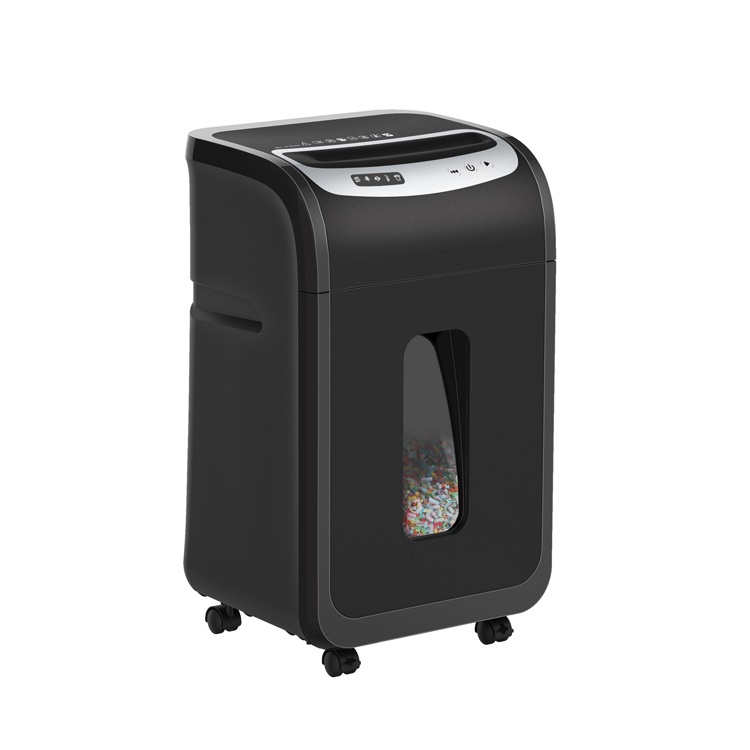
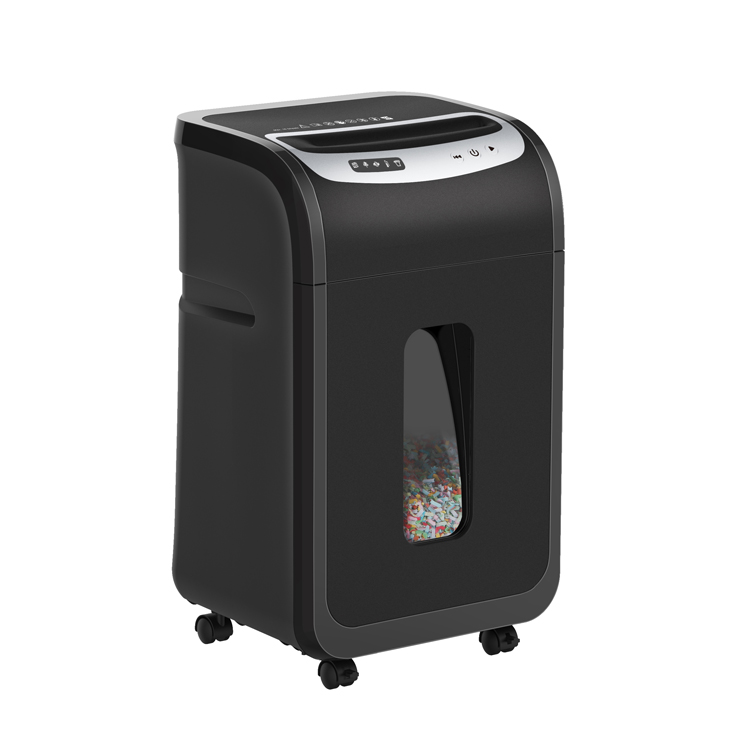
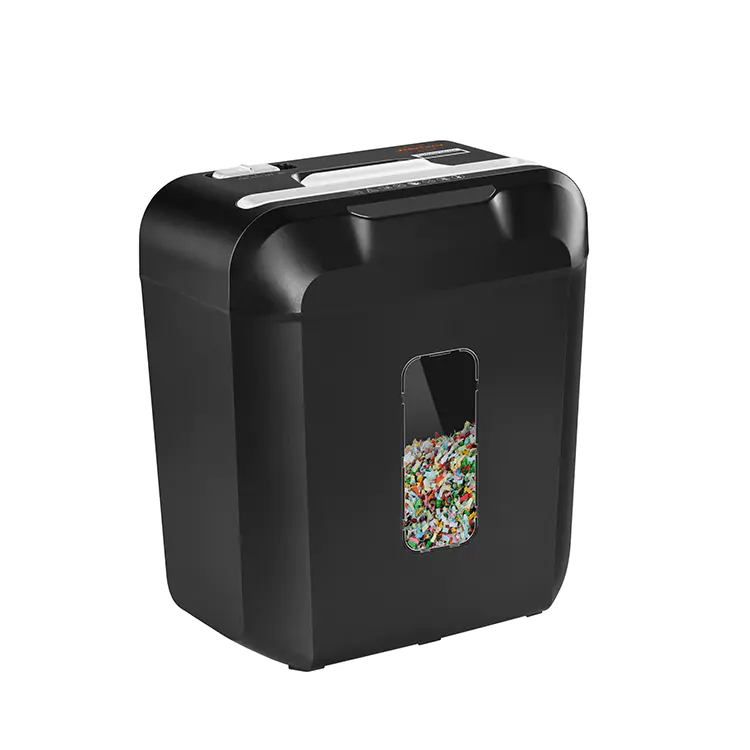
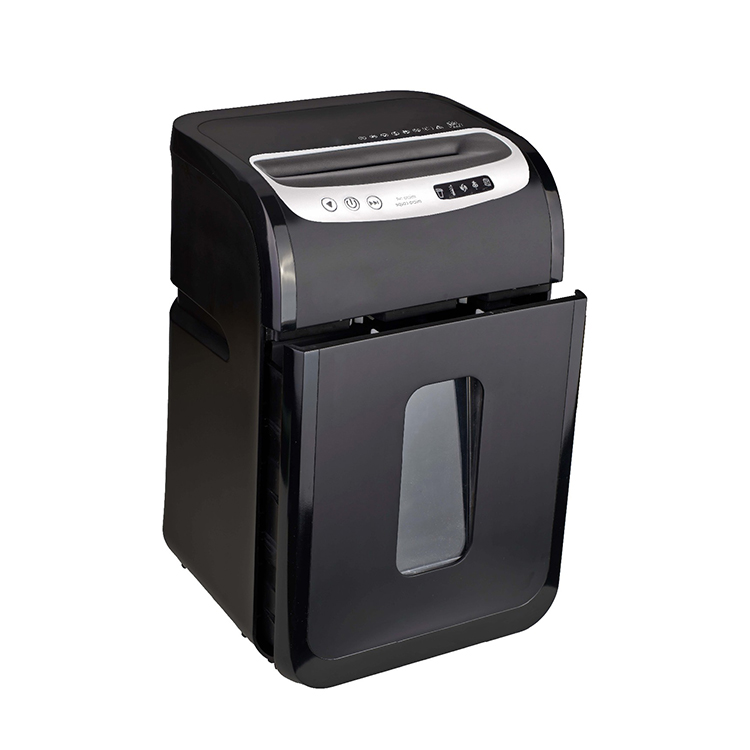
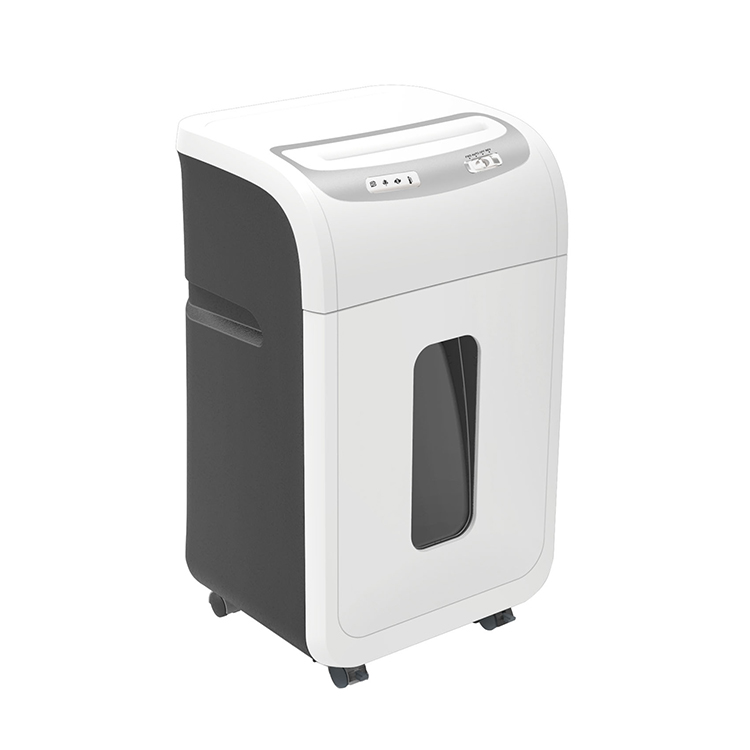
In its simplest form, a paper shredder consists of a feed slot at the top, a set of rotating cutting blades or cylinders in the middle, and a waste bin at the bottom. You insert a document, the motor drives the blades, and the paper emerges as strips, particles, or fine confetti-like pieces depending on the machine type.
According to the Federal Trade Commission (FTC), identity theft affects approximately 1.1 million Americans annually, and improperly discarded paper documents remain one of the most common sources of stolen personal data. A paper shredder is the single most effective low-cost tool to eliminate this risk at home or in the office.
How Does a Paper Shredder Actually Work?
The working mechanism of a paper shredder is straightforward but precisely engineered. Here is a step-by-step breakdown of what happens from the moment you insert a document to when it lands in the waste bin.
Step 1 — Paper Detection and Feed
Most modern shredders include an auto-start sensor — typically an infrared beam — positioned just inside the feed slot. When paper breaks the sensor beam, the motor automatically activates. On manual models, the user presses a button or switch to begin operation.
Step 2 — The Cutting Mechanism
The heart of any paper shredder is its cutting assembly. This consists of one or two sets of counter-rotating hardened steel cylinders with interlocking cutting blades. As paper is pulled into the machine by feed rollers, the spinning blades slice through it. The geometry of the blades determines the shred type — straight blades produce long strips, while offset or cross-cutting blades produce smaller particles.
The cutting cylinders typically spin at 200–450 RPM depending on the motor power and shred type. Higher-security shredders use more complex blade arrangements that cut both horizontally and vertically simultaneously.
Step 3 — Waste Collection
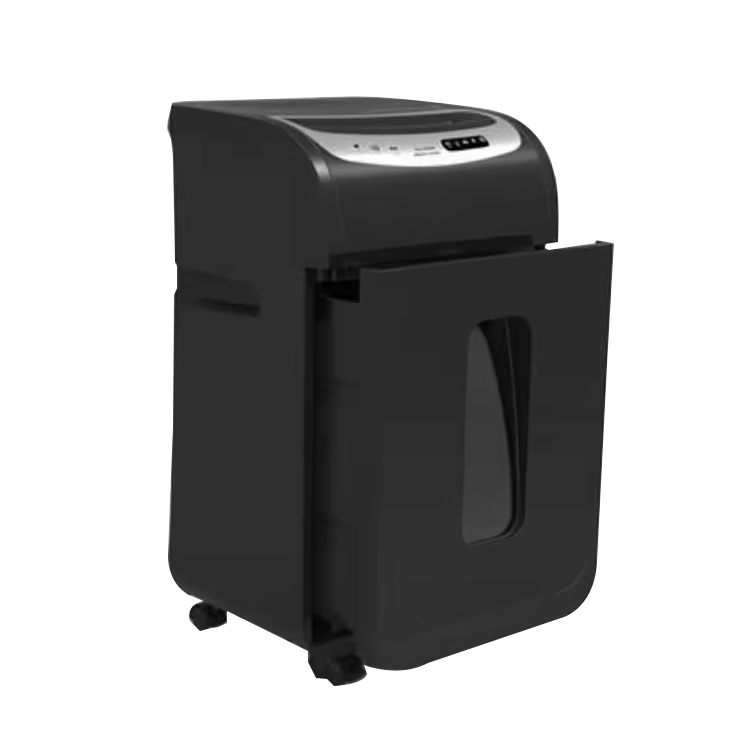
After cutting, the shredded material falls by gravity into a removable waste bin positioned below the cutting assembly. Most home shredders have bins ranging from 4 to 9 gallons, while commercial units can hold 15 to 30+ gallons. When the bin is full, a sensor typically halts operation until the bin is emptied.
Step 4 — Thermal Protection and Cool-Down
Shredder motors generate significant heat during continuous use. Most consumer shredders include a thermal overload protection system that automatically shuts the motor off when it reaches a critical temperature. After a cool-down period — typically 20–60 minutes for budget models — the shredder can resume operation. Heavy-duty and commercial shredders are engineered for continuous-duty cycles with little to no downtime.
Types of Paper Shredders: Strip-Cut, Cross-Cut, Micro-Cut, and More
Not all paper shredders are created equal. The type of cut determines the security level, and choosing the wrong one can leave your sensitive data vulnerable. Here is a breakdown of every major shredder type:
Strip-Cut Shredders
Strip-cut shredders slice paper into long vertical ribbons, typically 5/32 to 1/2 inch wide. They are the fastest and most affordable shredder type but offer the lowest security level (DIN P-2). A determined person could theoretically reassemble the strips. Best for: non-sensitive documents like junk mail and expired coupons.
Cross-Cut Shredders
Cross-cut (also called confetti-cut) shredders cut paper both vertically and horizontally, producing small rectangular or diamond-shaped pieces. A standard cross-cut shredder reduces one sheet of A4 paper into approximately 200–400 particles, offering a DIN P-3 or P-4 security level. This is the most popular type for home and small office use, balancing security, speed, and cost.
Micro-Cut Shredders
Micro-cut shredders produce extremely small particles — sometimes as tiny as 1/32 × 5/32 inch — turning a single page into 2,000+ tiny fragments. They meet DIN P-5 security standards and are recommended for highly sensitive documents including medical records, legal contracts, and financial statements. They are slower and more expensive than cross-cut models but offer vastly superior document destruction.
High-Security / Particle-Cut Shredders
Used in government agencies, defense contractors, and intelligence organizations, particle-cut shredders achieve DIN P-6 or P-7 ratings — the highest possible. At P-7, particles measure no more than 5 mm² in total surface area. These machines are NSA/CSS EPL-listed and often cost $1,000–$10,000+.
| Shredder Type | Cut Size | Particles per Sheet | Security Level | Best For |
|---|---|---|---|---|
| Strip-Cut | 5/32"–1/2" wide strips | ~39 | DIN P-2 | Junk mail, low-risk docs |
| Cross-Cut | ~3/16" × 1.5" particles | ~200–400 | DIN P-3/P-4 | Home & small office |
| Micro-Cut | ~1/32" × 5/32" particles | ~2,000+ | DIN P-5 | Financial, medical, legal docs |
| Particle-Cut | ≤5 mm² total area | ~5,000+ | DIN P-6/P-7 | Government, defense, intelligence |
Understanding DIN Security Levels: What Do They Mean?
DIN 66399 is the international standard that classifies shredder security levels from P-1 (lowest) to P-7 (highest). The DIN level tells you exactly how small the shredded particles are and, by extension, how difficult it would be for someone to reconstruct a document.
| DIN Level | Max Particle Size | Recommended For |
|---|---|---|
| P-1 | 2,000 mm² | General paper disposal |
| P-2 | 800 mm² | Internal documents, junk mail |
| P-3 | 320 mm² | Personal data, home use |
| P-4 | 160 mm² | Sensitive personal data, small office |
| P-5 | 30 mm² | Confidential business data, financial records |
| P-6 | 10 mm² | Secret documents, high-security environments |
| P-7 | 5 mm² | Top secret, military & government use |
For most home users, a P-3 or P-4 cross-cut shredder provides more than sufficient protection. Businesses handling HIPAA, GDPR, or PCI-DSS regulated data should aim for at least P-4 or P-5.
Key Specifications to Understand Before Buying a Paper Shredder
Beyond the cut type, several technical specifications affect how useful a paper shredder will be in your day-to-day life. Understanding these before you buy will save you from frustration down the line.
Sheet Capacity
Sheet capacity refers to the maximum number of sheets a shredder can cut in a single pass. Entry-level home shredders handle 5–8 sheets, mid-range models handle 10–15 sheets, and heavy-duty office shredders can process 20–40+ sheets at once. Consistently exceeding the sheet capacity is the leading cause of jams and premature motor burnout.
Run Time and Duty Cycle
Run time is the number of continuous minutes a shredder can operate before requiring a cool-down period. Budget shredders typically offer 2–5 minutes of run time before needing 20–30 minutes to cool. Mid-range shredders offer 10–20 minutes, while commercial shredders are rated for continuous-duty operation — meaning they can run all day without overheating.
Bin Capacity
The waste bin must be emptied regularly. Personal shredders typically have 3–5 gallon bins, suitable for occasional use. Office shredders used by multiple people should have bins of at least 7–9 gallons to reduce the frequency of emptying. Note that micro-cut shredders produce fluffier, less dense waste, so they fill bins faster than strip-cut models of comparable bin size.
What Else Can a Paper Shredder Handle?
Many modern shredders can handle more than just paper. Depending on the model, they may also shred:
- Credit cards and debit cards — most cross-cut and micro-cut shredders include a dedicated card slot
- Staples and paper clips — hardened steel blades on mid-to-high models can handle these without damage
- CDs and DVDs — optical disc shredders use serrated cutting wheels; not all paper shredders support this
- USB drives and SD cards — only heavy-duty models with reinforced blades can safely shred electronic media
- Envelopes with windows — most mid-range shredders handle these, though plastic windows may dull blades over time
Always check your specific model's capability list before feeding it non-paper items. Attempting to shred unsupported materials is one of the most common causes of shredder damage.
Paper Shredder Categories by Use Case
Paper shredders are designed for different environments. Matching the shredder category to your actual use case is just as important as choosing the right cut type.
Personal / Home Use Shredders
Designed for one user shredding occasional documents. Typically process 5–8 sheets per pass, have a 3–5 gallon bin, and run for 2–5 minutes before cooling. Models like the AmazonBasics 8-Sheet Cross-Cut and Fellowes Powershred 79Ci fall into this category, priced between $30–$100.
Small Office / Home Office (SOHO) Shredders
Built for 1–5 users sharing a single machine. These handle 10–15 sheets per pass, feature 6–8 gallon bins, and offer run times of 10–20 minutes. Popular models include the Fellowes Powershred 99Ci and AmazonBasics 15-Sheet. Expected price range: $100–$250.
Commercial / Departmental Shredders
Engineered for continuous or near-continuous operation, serving departments of 5–20+ users. Sheet capacity ranges from 20–40 sheets, bins hold 15–30+ gallons, and many models feature continuous-duty motors. Brands like Destroyit, Rexel, and HSM dominate this category. Price range: $500–$3,000+.
Industrial Shredders
Used by document destruction companies, hospitals, and government agencies, industrial shredders can process entire boxes or bags of documents without manual feeding. They feature conveyor belts, automatic jam reversal, and throughput measured in pounds per hour rather than sheets per pass. These units often weigh hundreds of pounds and cost $5,000–$50,000+.
Why Do Paper Shredders Jam — and How to Prevent It
A jammed paper shredder is one of the most common frustrations users report. Understanding the causes helps you avoid them entirely.
Common Causes of Jams
- Overfeeding: Inserting more sheets than the rated capacity — even by one or two sheets — dramatically increases jam risk
- Infrequent oiling: Paper shredder blades need lubrication every 30–50 minutes of run time or after every waste bin emptying
- Shredding unsupported materials: Thick cardboard, plastic not rated for shredding, and glossy photo paper can overwhelm standard blades
- Overfull waste bin: When the bin is full, shredded material has nowhere to go and packs against the blades
- Wrinkled or folded paper: Thick folds can catch on the blade housing and stall the motor
How to Clear a Jammed Shredder
- Switch the shredder to reverse mode (most models have this function) and hold for 5–10 seconds
- If reverse does not clear it, power off and unplug the machine
- Carefully pull out accessible paper by hand — do not use metal tools near blades
- Apply shredder oil to the cutting blades and run in reverse for another 10 seconds
- Power back on in forward mode and test with a single sheet
How to Maintain a Paper Shredder and Extend Its Life
A well-maintained paper shredder can last 5–10 years or longer. Neglected machines often fail within 2–3 years. Here are the essential maintenance steps every shredder owner should follow.
Regular Oiling
This is the single most important maintenance task. Use only shredder-specific oil (not WD-40 or generic lubricants, which can damage plastic components). Apply a thin zigzag line of oil across the full width of the paper entry slot, then run the shredder forward and reverse for 10 seconds. Do this every 30 minutes of use or every time you empty the waste bin — whichever comes first. Many manufacturers sell oil sheets as a more convenient alternative to liquid oil.
Empty the Bin Regularly
Do not wait until the "bin full" indicator light activates. Shredding into an overfull bin stresses the motor and packs waste around the blades. Empty the bin when it is approximately two-thirds full for optimal performance.
Keep the Feed Slot Clear of Debris
Paper dust accumulates inside the feed slot and cutting assembly over time. Every few months, use a can of compressed air to blow out accumulated dust from the feed slot and ventilation ports. This prevents dust buildup from insulating the motor and causing overheating.
Respect the Duty Cycle
Never push a shredder beyond its rated run time. If your model has a 5-minute duty cycle, stop at 4 minutes and allow it to cool completely. Consistently overrunning the duty cycle burns out the thermal fuse and motor windings — the most expensive components to replace.
Legal and Compliance Reasons to Use a Paper Shredder
Using a paper shredder is not just good practice — in many industries, it is a legal requirement. Several major data protection regulations mandate the secure destruction of physical documents:
- HIPAA (Health Insurance Portability and Accountability Act): Requires healthcare providers to properly destroy all physical records containing Protected Health Information (PHI). Non-compliance penalties range from $100 to $50,000 per violation.
- FACTA (Fair and Accurate Credit Transactions Act): Requires businesses to take reasonable measures to dispose of consumer credit information, including shredding paper records.
- GDPR (General Data Protection Regulation): EU regulation requiring secure disposal of personal data in any form, including printed documents.
- Sarbanes-Oxley Act (SOX): Requires public companies to securely retain and eventually destroy financial records per defined schedules.
Even for individuals not subject to these regulations, the FTC's Disposal Rule recommends that all consumers shred documents containing personal identifying information before disposal. This includes bank statements, utility bills, pre-approved credit card offers, and medical Explanation of Benefits (EOB) statements.
How to Choose the Right Paper Shredder for Your Needs
With so many options available, here is a practical decision framework to help you select the ideal shredder:
- Determine your security level need: Home user with occasional bills → P-3 cross-cut. Business with financial or medical records → P-4 or P-5 micro-cut. Government or defense → P-6/P-7.
- Estimate your daily volume: Fewer than 50 sheets/day → personal shredder. 50–200 sheets/day → SOHO shredder. 200+ sheets/day → commercial unit.
- Consider shared vs. individual use: Shared office shredders need higher sheet capacity, longer duty cycles, and larger bins.
- Check media shredding needs: If you regularly destroy CDs, credit cards, or USB drives, confirm the model explicitly supports those media types.
- Factor in noise: Some shredders operate at 55–75 dB — comparable to a vacuum cleaner. If you work in a quiet environment, look for models rated below 60 dB.
- Set a realistic budget: Do not buy the cheapest model if your usage is moderate-to-heavy. A $60 shredder used daily will fail far sooner than a $200 model used the same way.
| User Type | Recommended Cut | Min. Sheet Capacity | Budget Range |
|---|---|---|---|
| Home (occasional use) | Cross-Cut (P-3/P-4) | 6–8 sheets | $30–$100 |
| Home Office (regular use) | Micro-Cut (P-4/P-5) | 10–12 sheets | $100–$200 |
| Small Office (1–5 users) | Micro-Cut (P-4/P-5) | 15–20 sheets | $200–$500 |
| Department / Office (5–20 users) | Micro-Cut (P-5) | 20–40 sheets | $500–$2,000 |
| Government / High-Security | Particle-Cut (P-6/P-7) | 20–40 sheets | $1,000–$10,000+ |
Final Takeaway: What a Paper Shredder Is and Why You Need One
A paper shredder is a mechanical document destruction device that uses rotating steel blades to reduce paper into unreadable strips or particles. It is one of the most cost-effective privacy protection tools available, with quality home models starting at under $50 and paying for themselves the first time they prevent a case of identity theft.
The key decisions are: cut type (cross-cut for most, micro-cut for sensitive data), sheet capacity matched to your volume, and duty cycle appropriate for how often you'll use it. Maintain your shredder with regular oiling, empty the bin before it's full, and never exceed the rated sheet capacity — and a good shredder will serve you reliably for many years.
Whether you're protecting personal finances at home, ensuring regulatory compliance in a medical office, or safeguarding classified materials in a government facility, there is a paper shredder precisely engineered for that purpose. The only wrong choice is having no shredder at all.


-
 Kaifat Group, No.599, Qiming Road, Yinzhou Incubation, Ningbo, China
-
 +86-574-55665196
-
 [email protected]
