
 English
 русский
 Español
 Deutsch
 عربى
عربى
 0
0

How do you choose a paper shredder? What is the difference between cross-cut and strip-cut models?
Content
- 1 Cross-Cut vs. Strip-Cut: The Fundamental Difference Explained
- 2 Understanding DIN 66399 Security Levels
- 3 Shredder Categories: From Personal Desk Units to Industrial Machines
- 4 Jam-Proof Technology: Why It Matters More Than You Think
- 5 Specialty Shredders: Beyond Standard Paper Destruction
- 6 Heavy Duty Cross-Cut Shredders: What to Look For
- 7 Large Office Paper Shredders: Managing High-Volume Environments
- 8 Shredding Bins for Sale: Secure Collection Before Destruction
- 9 Paper Shredder Machine Rental: When Buying Doesn't Make Sense
- 10 Brand Spotlight: Noteworthy Models Across Categories
- 11 Choosing the Right Shredder: A Decision Framework
- 12 Maintenance Tips to Extend Shredder Life
- 13 Final Verdict: Cross-Cut for Most, Specialised for the Rest
The short answer: if you are shredding anything containing personal, financial, or confidential data, choose a cross-cut shredder — ideally rated at DIN P-4 or above. Strip-cut models are faster and cheaper, but they leave long readable strips that can be reassembled. For most home users and office environments, a cross-cut shredder strikes the right balance between security, cost, and convenience. If your needs go further — handling credit cards, CDs, or bulk shredding — there are purpose-built machines for every scenario, from the compact shredder mini to industrial-grade heavy duty cross cut shredders and even hydraulic shredders for large-scale destruction.
This guide walks through everything you need to know: how shredder types differ, what the security standards mean, which features matter most, and how to match the right machine to your actual situation — whether you are outfitting a home office, managing a busy corporate floor, or evaluating a paper shredder machine rental for a one-time purge project.
Cross-Cut vs. Strip-Cut: The Fundamental Difference Explained
The most important decision when buying a paper shredder is the cut type. Everything else — bin size, run time, sheet capacity — is secondary to how securely the machine destroys your documents.
How Strip-Cut Shredders Work
Strip-cut (also called straight-cut) shredders slice paper into long vertical ribbons, typically 5–6mm wide. An A4 sheet fed into a standard strip-cut machine produces roughly 30–40 strips. While these strips are no longer a complete document, they are long enough that a determined individual — or automated document reconstruction software — can piece them back together. In independent tests, forensic reconstruction of strip-cut documents has been demonstrated in under two hours using commercially available software.
That said, strip-cut machines have real advantages: they are faster, generate less blade wear, and handle higher sheet volumes per pass. For shredding non-sensitive bulk paper — draft printouts, internal memos, packaging materials — they remain a practical choice.
How Cross-Cut Shredders Work
Cross-cut shredders use two sets of blades cutting perpendicular to each other, reducing paper into small rectangular or diamond-shaped particles. The same A4 sheet yields 200 to 400+ particles, depending on the machine's cut geometry. At this particle count, manual or computational reconstruction becomes extremely difficult and impractical in most real-world scenarios.
The debate around cross cut shredder vs strip cut shredder often comes down to this: strip-cut is adequate for low-sensitivity disposal; cross-cut is appropriate for anything you genuinely need to keep private. Understanding this distinction helps you avoid the common mistake of using a strip-cut machine for bank statements or HR files simply because it was cheaper or faster.
What About Micro-Cut and Other Types?
Beyond cross-cut, micro-cut shredders reduce paper to particles as small as 2mm × 15mm, producing thousands of fragments per sheet. A common question buyers ask is: are micro cut shredders worth it? The answer depends on your threat model. For handling classified government documents, legal records, or medical files subject to HIPAA or GDPR, yes — the additional security is worth the premium. For typical home or small business use, a well-rated cross-cut shredder at P-4 provides sufficient protection at a more accessible price point.
Specialty shredders also exist for specific materials. A media shredder is designed to destroy optical discs, USB drives, and hard drives in addition to paper. A scissors shredder uses a scissor-action mechanism for quieter, gentler cutting — often favoured in small office environments where noise is a concern. Some industrial applications use a double shaft shredder, which employs two counter-rotating shafts to destroy thick materials including cardboard, plastic, and even light metal components.
Understanding DIN 66399 Security Levels
The international standard DIN 66399 defines seven security levels for paper destruction, labelled P-1 through P-7. Every reputable shredder sold today should display its DIN rating clearly. This classification removes ambiguity — rather than relying on a manufacturer's marketing language, you can compare machines on a standardised scale.
| DIN Level | Cut Type | Max Particle Size | Typical Use |
|---|---|---|---|
| P-1 | Strip-cut | 2,000 mm² | General document disposal |
| P-2 | Strip-cut | 800 mm² | Internal documents, low sensitivity |
| P-3 | Cross-cut | 320 mm² | Standard confidential documents |
| P-4 | Cross-cut | 160 mm² | Financial records, HR files, personal data |
| P-5 | Micro-cut | 30 mm² | Legal, medical, GDPR-sensitive records |
| P-6 | Micro-cut | 10 mm² | Government, intelligence-grade destruction |
| P-7 | Micro-cut | 5 mm² | Top-secret, classified military documents |
For the majority of businesses and households, P-4 is the practical benchmark. It is stringent enough to satisfy most data protection regulations and is widely available across all price ranges. If you are subject to HIPAA, GDPR, or similar frameworks, consult your compliance officer — some regulatory environments explicitly require P-5 or above.
Shredder Categories: From Personal Desk Units to Industrial Machines
Shredders are not one-size-fits-all. The right category depends on volume, environment, and the types of materials being destroyed.
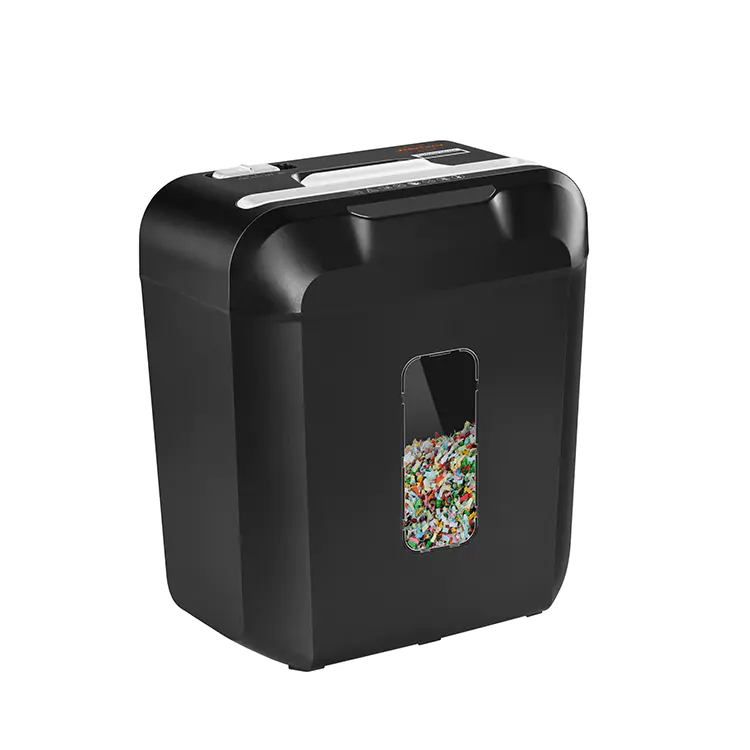
Personal and Home Office: Shredder Mini and Compact Models
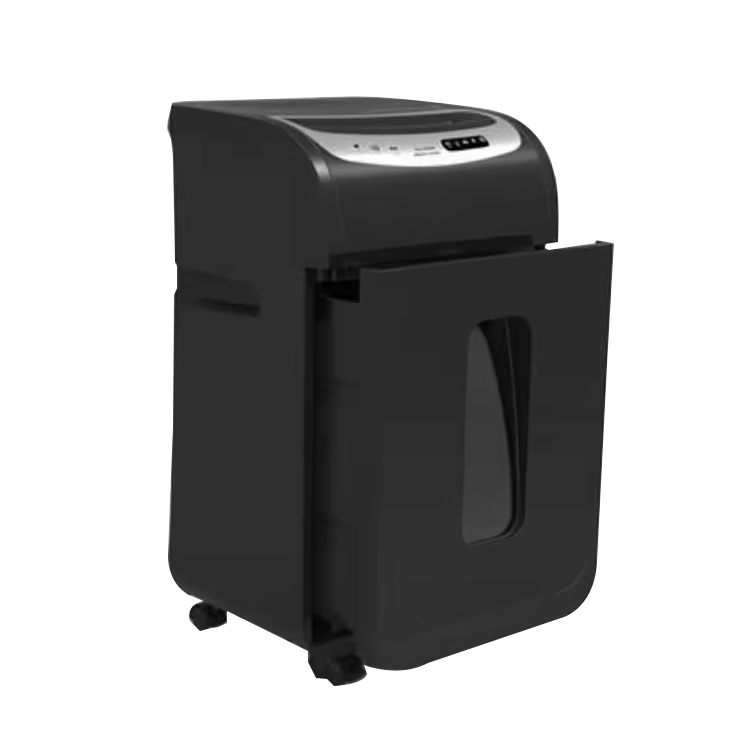
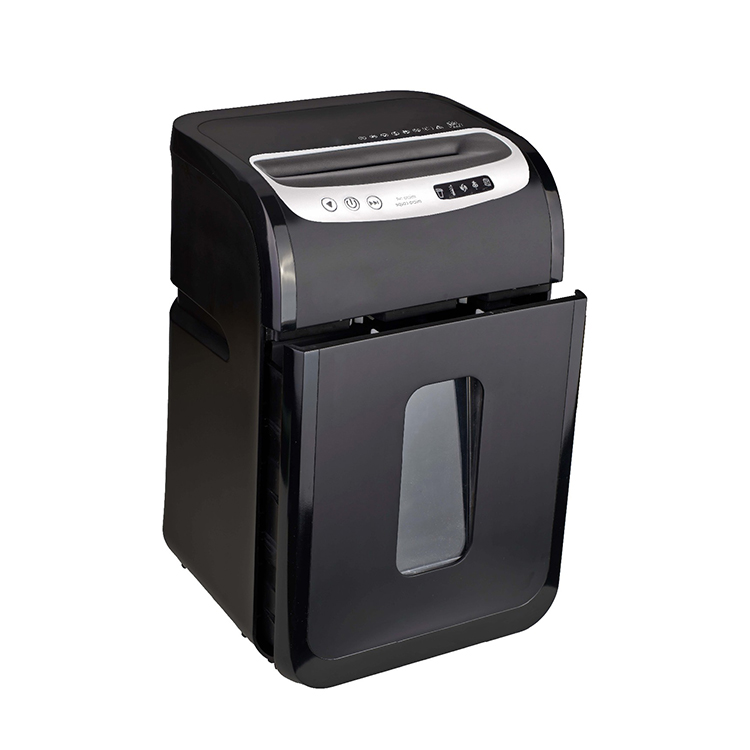
For individuals shredding a handful of documents per week — utility bills, bank statements, junk mail with personal details — a shredder mini or compact personal unit is entirely adequate. These machines typically handle 4–6 sheets per pass, have a bin capacity of 8–15 litres, and are priced between $30 and $80. They are not built for sustained daily use and usually require a cool-down after 2–3 minutes of continuous operation.
Look for a cross-cut model rated at P-4, a reverse function for clearing jams, and a bin that is easy to empty. The Fellowes PowerShred 79Ci (often referenced as the powershred 79ci) is a popular example in this tier — it offers 16-sheet cross-cut capacity, P-4 security, and a 100% jam-proof system backed by a sensor that detects overloads and auto-reverses. It is a reliable choice for home or small office use and retails around $130–$160.
Small to Mid-Size Office: Shredders for Office Environments
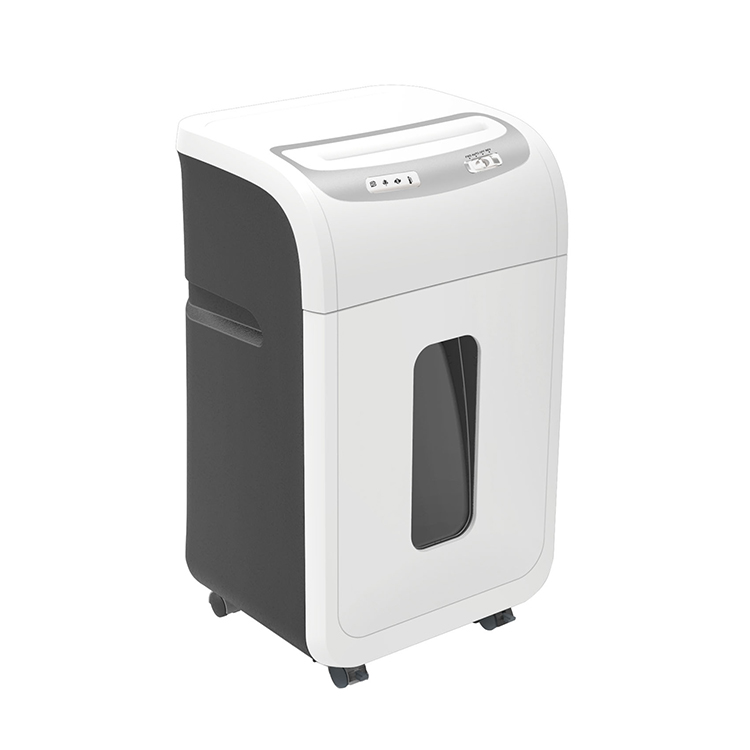
For teams of 3–10 people with moderate daily shredding needs, standard shredders for office use offer a meaningful step up in capacity and run time. These machines typically handle 10–18 sheets per pass, run continuously for 20–30 minutes before requiring a rest, and feature bins of 20–30 litres. Brands like Fellowes, Rexel, and HSM dominate this segment with well-reviewed mid-range models.
The Kobra Cyclone shredder is a notable model in this category. Known for its cyclone cutting system that pulls paper through automatically with minimal jamming, the Kobra line is favoured in small legal and accounting offices where daily use demands reliability. Its cross-cut geometry meets P-4 requirements, and its auto-feed tray (on select models) can accept up to 80 sheets unattended — a practical feature when clearing a day's worth of confidential printouts.
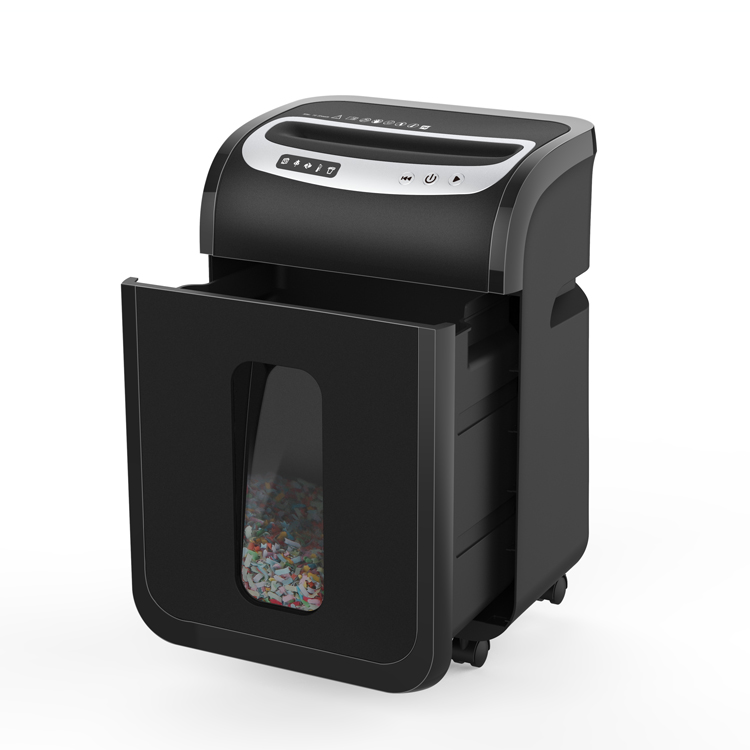
Large Office and High-Volume: Big Office Shredders and Heavy Duty Models
Organisations with 10 or more users, or those generating high volumes of confidential paper waste daily, require big office shredders or office shredders heavy duty grade machines. These are engineered for continuous-duty operation — meaning they can run all day without a mandatory cool-down — and typically handle 20–35 sheets per pass with bin capacities of 60–100+ litres.
The MBM paper shredders range is a well-regarded option at this level. MBM produces commercial-grade cross-cut and strip-cut machines built for sustained performance, with some models supporting auto-oiling systems that lubricate blades automatically — eliminating a common maintenance oversight. Their heavy-duty models are often found in law firms, financial institutions, and government offices.
Another benchmark product in this segment is the Ideal 2604 shredder. The Ideal 2604 is a professional-grade strip-cut machine designed for high-volume document disposal, capable of shredding up to 26 sheets per pass at a speed of 4 metres per minute. While strip-cut limits its security rating to P-2, its throughput makes it a go-to for organisations focused on bulk disposal of non-sensitive archived documents.
Auto-Feed Shredders: The Best Auto Feed Shredder Options
Auto-feed shredders allow users to load a stack of paper into a separate locked tray, walk away, and return to find it all shredded. The best auto feed shredder models combine this hands-free convenience with strong security and jam-proof performance. Fellowes, Aurora, and Rexel all produce well-reviewed auto-feed models ranging from 60-sheet to 250-sheet tray capacities.
Key considerations when evaluating auto-feed models include:
- Tray lock security: The auto-feed tray should lock when shredding begins to prevent accidental access
- Mixed media handling: The best models accept paper with staples and paper clips still attached
- Jam recovery: Look for models with automatic jam-clearing or reverse functions
- Noise level: Auto-feed machines can be louder; check decibel ratings if the unit sits in an open office
The Fellowes AutoMax 550C, for example, accepts up to 550 sheets in its auto-feed tray and achieves P-4 cross-cut security. It is one of the highest-capacity auto-feed units available for office environments and is priced around $350–$420.
Jam-Proof Technology: Why It Matters More Than You Think
Paper jams are the leading cause of shredder frustration and premature machine failure. In busy office environments, a jammed shredder creates workflow interruptions and, in some cases, damages the cutting head if cleared incorrectly. The emergence of jam proof shredder technology has significantly reduced this problem.
True jam-proof systems use load sensors that detect paper overload before a jam can form and automatically reverse or slow the feed. Fellowes' 100% Jam Proof technology, found in models like the powershred 79ci, uses sensors to monitor paper load in real time and adjusts automatically. In independent testing, Fellowes jam-proof models reduced jam incidents by over 90% compared to non-protected machines in high-volume scenarios.
If your office shredder jams frequently, the likely causes are:
- Exceeding the rated sheet capacity per pass
- Feeding paper at an angle rather than straight into the feed slot
- Infrequent oiling of the cutting blades
- Feeding materials the machine is not rated to handle (e.g., laminated paper, thick card)
Regular oiling is especially important for cross-cut machines. Most manufacturers recommend using shredder oil — not household lubricants — every 30 minutes of cumulative use or once a month, whichever comes first. Neglecting this step is the single most common cause of cross-cut blade degradation and motor overheating.
Specialty Shredders: Beyond Standard Paper Destruction
Not all shredding needs involve standard A4 paper. Depending on your industry or application, you may require a machine designed for specific materials or operational environments.
Media Shredders
A media shredder handles optical discs (CDs, DVDs, Blu-rays), credit cards, and sometimes USB drives and hard drives in addition to paper. For IT departments decommissioning old equipment or compliance officers needing to certify full data destruction across multiple media types, a combination media shredder eliminates the need for separate destruction equipment. Models from Fellowes, Dahle, and HSM typically certify destruction of optical media under DIN 66399's O-class standards, separate from the paper P-class ratings.
Crinkle Cut Shredders
A crinkle cut shredder produces wavy, crinkled strips rather than straight ones. While not a security-grade product, crinkle-cut shredding is widely used in packaging and retail operations to create void fill and protective packing material from waste paper. A single box of A4 paper run through a crinkle cut shredder produces enough packaging fill for several medium shipping boxes — an environmentally practical alternative to buying polystyrene or bubble wrap.
Scissors Shredder
The scissors shredder mechanism mimics the cutting action of scissors, using interlocking blades rather than rotary cutters. These machines operate more quietly than standard shredders, produce less heat, and tend to handle thicker or coated materials more reliably. They are often used in design studios, photography labs, or environments where noise levels are tightly controlled. The trade-off is lower throughput compared to rotary cross-cut machines.
Hammer Shredder and Double Shaft Shredder
At the industrial end of the spectrum, a hammer shredder uses rotating hammers or flails to pulverise materials — commonly used for destroying electronic waste, hard drives, circuit boards, and other hardware rather than paper. Similarly, a double shaft shredder employs two counter-rotating shafts with interlocking cutters to process bulky or heterogeneous materials including cardboard, textiles, plastic casing, and light metal. These machines are not typically found in office environments but are standard in data destruction centres and recycling operations.
Hydraulic Shredder
A hydraulic shredder uses hydraulic force to compress and tear materials rather than rotating blades. These are large-format industrial machines designed for destroying high-security items — server racks, safes, classified hardware, or bulk quantities of sensitive materials — and are operated by specialist data destruction companies. They are not a retail product but are relevant context for organisations evaluating destruction options beyond standard office shredders.
Meat Shredding Machine
While not a document shredder, the term meat shredding machine frequently appears in shredder-related searches. A meat shredder is a food preparation appliance — typically an electric claw or paddle mechanism — used to pull and shred cooked meat (chicken, pork, beef) quickly and consistently. Commercial versions are used in restaurant kitchens and catering operations. This should not be confused with paper or industrial shredders, although the operating principle — mechanical tearing — has some surface similarity.
Metal Crusher Machine
Similarly, a metal crusher machine is an industrial device used in scrap metal processing, manufacturing waste reduction, and recycling operations. Like hydraulic shredders, metal crushers operate at a scale entirely separate from office document destruction and are listed here for context, given their overlap in search terminology with heavy-duty shredder equipment.
Heavy Duty Cross-Cut Shredders: What to Look For
A heavy duty cross cut shredder is the gold standard for organisations that need both high throughput and genuine security. These machines combine the cross-cut geometry of a standard office shredder with industrial-grade motors, continuous-duty capability, and high sheet capacity. Here is what distinguishes a genuinely heavy-duty cross-cut machine from a standard office model:
| Specification | Standard Office Cross-Cut | Heavy Duty Cross-Cut |
|---|---|---|
| Sheets per pass | 8–14 | 20–35 |
| Run time | 20–30 min with rest | Continuous duty |
| Bin capacity | 20–35 litres | 60–150 litres |
| Users supported | 3–8 | 15–50+ |
| Auto-oiling | Manual (most models) | Automatic (most models) |
| Typical price range | $80–$250 | $400–$2,000+ |
When evaluating heavy-duty models, pay particular attention to the manufacturer's user rating — a machine rated for 20 users that is shared by 35 will experience accelerated wear and increased jam frequency. Under-specifying shredder capacity is one of the most common and costly mistakes in office procurement.
Large Office Paper Shredders: Managing High-Volume Environments
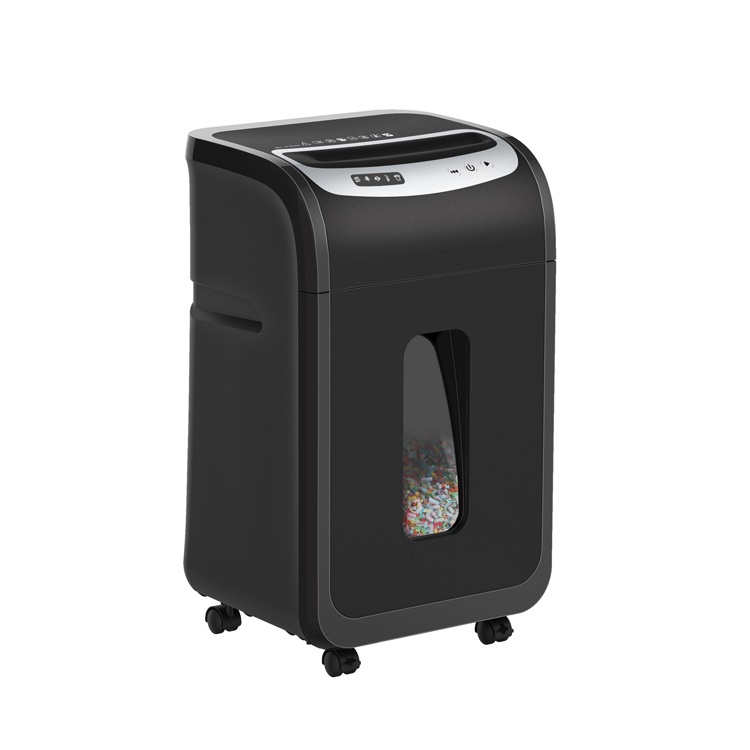
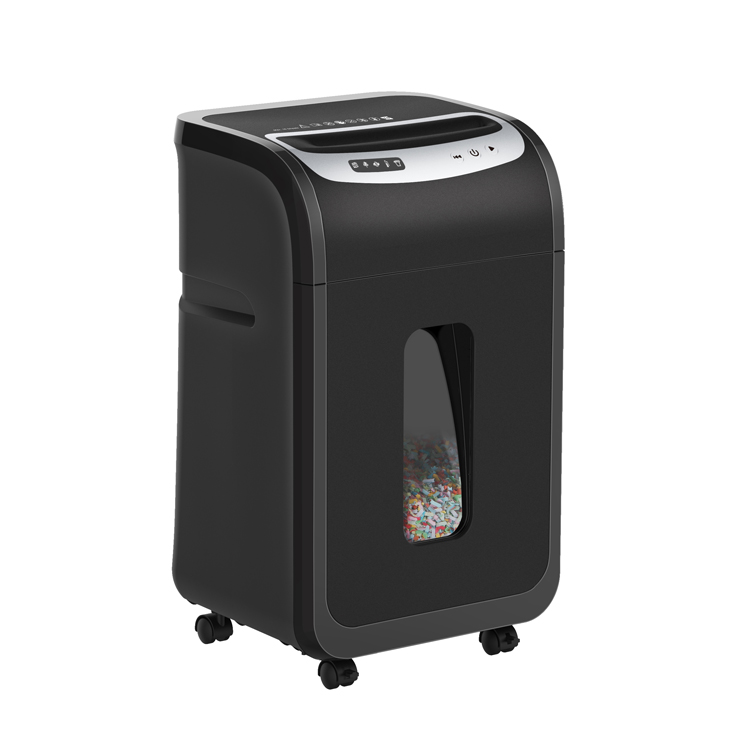
A large office paper shredder is not simply a bigger version of a desk model — it represents a different category of equipment with distinct considerations for placement, maintenance, and waste management.
Floor-standing commercial shredders typically feature:
- Integrated waste bins with bag-liner systems that allow fast, hygienic emptying without contact with shredded material
- Network connectivity on some premium models, enabling usage monitoring and maintenance scheduling from a central admin console
- Wide feed openings — up to 400mm — accommodating A3 documents, folded materials, and bound pages
- Lockable waste bins to maintain security of shredded material until disposal
For large organisations, the physical placement of floor-standing shredders is a logistics consideration. Placing machines near printing and copying stations reduces the distance staff must carry documents for destruction — a simple change that meaningfully increases compliance with document disposal policies.
Shredding Bins for Sale: Secure Collection Before Destruction
In many office environments, documents are not shredded immediately — they are collected throughout the day or week and processed in batch. This is where shredding bins for sale become an important part of the security workflow. A shredding bin (also called a console or confidential waste bin) is a locked, tamper-resistant receptacle placed near workstations where staff can deposit documents securely until a scheduled shredding run or collection service.
Key features to look for in shredding bins include:
- Key or combination lock to prevent unauthorised access
- Slot opening design that allows paper insertion but prevents hand access to retrieve documents
- Capacity marking — most office console bins range from 60 to 240 litres
- Compatibility with bag liners for easy emptying into the shredder or for collection by a third-party shredding service
Shredding bins are essential in any environment using a scheduled document destruction service. They serve as the secure interim custody point, ensuring that confidential documents are not left in open recycling bins or desktops between shredding sessions.
Paper Shredder Machine Rental: When Buying Doesn't Make Sense
Not every organisation needs to own a shredder. Paper shredder machine rental is a practical and increasingly popular option for businesses that have periodic rather than ongoing shredding requirements — for example, year-end archive clearances, office relocations, or one-time compliance purges.
Rental services typically fall into two categories:
- Self-service equipment rental: A heavy-duty or industrial shredder is delivered to your premises for a set period (typically 1–5 days). Your team operates the machine. Costs typically range from $150–$500 per day depending on machine size and location.
- Managed on-site shredding service: A specialist contractor brings a shredding truck or portable industrial shredder to your site, shreds documents on-site while you watch, and provides a certificate of destruction for compliance purposes. This option is often used by legal, medical, and financial organisations.
For organisations shredding fewer than 200kg of documents per year, rental or a managed service is often more cost-effective than purchasing and maintaining a commercial shredder. Calculate your annual shredding volume before committing to a purchase — if it amounts to fewer than two or three banker boxes per month, a high-quality personal or small-office shredder purchased outright will likely serve you better than a large machine or a rental contract.
Brand Spotlight: Noteworthy Models Across Categories
The shredder market is crowded, but a handful of brands and models consistently receive strong reviews across categories. Here is a practical overview:
Fellowes PowerShred 79Ci
The powershred 79ci remains one of the most recommended home and personal office shredders on the market. Its SilentShred technology reduces noise to around 58 decibels — quieter than a normal conversation — while its 100% jam-proof system and 16-sheet capacity make it genuinely dependable for daily use. It handles paper, credit cards, and staples without requiring manual staple removal. For anyone looking for a reliable, mid-range cross-cut shredder, this is a consistent shortlist candidate.
Kobra Cyclone Shredder
The kobra cyclone shredder is designed around a cyclone airflow system that directs shredded particles down and away from the cutting head, reducing clogging and maintaining consistent feed speed. Kobra's machines are built in Italy and are notable for their build quality at mid-range price points. The cyclone mechanism is particularly effective in high-humidity environments, where paper is more prone to clumping and bridging in the cutting chamber.
MBM Paper Shredders
MBM paper shredders serve the professional and commercial segment with a focus on durability and serviceability. MBM machines are often found in environments where the shredder is a shared resource accessed by large teams throughout the day. Their cross-cut models include the Destroyit line, which spans from small office units to floor-standing commercial workhorses rated for continuous operation. MBM also offers a network of certified service centres — an important consideration for organisations that need guaranteed uptime.
Ideal 2604 Shredder
The ideal 2604 shredder is a high-throughput strip-cut machine built for volume document disposal. With a feed width of 240mm, a shred speed of 4 metres per minute, and a 26-sheet capacity, it is well suited for processing large archives of non-sensitive documents quickly. Its straightforward mechanism also means lower maintenance requirements compared to cross-cut equivalents at the same throughput level. Ideal GmbH is a German manufacturer with a strong reputation in professional document destruction equipment.
Choosing the Right Shredder: A Decision Framework
With so many options across categories, brands, and price points, the selection process can feel overwhelming. Use this framework to narrow your choice systematically:
- Define your security requirement. Are you shredding personal or financial documents? Choose cross-cut at P-4 minimum. Handling regulated data (medical, legal)? Consider micro-cut at P-5 or above.
- Estimate your volume. How many sheets per day? How many users? This determines whether you need a personal, office, or commercial-grade machine.
- Identify any special materials. Credit cards, CDs, stapled documents, or thick card? Verify that your chosen model explicitly supports these.
- Decide on ownership vs. rental. If shredding is periodic, evaluate paper shredder machine rental or managed service options before purchasing.
- Assess operational preferences. Do you need auto-feed for hands-free operation? Quiet operation for an open office? Continuous-duty for all-day use?
- Set a realistic budget. Do not over-specify — a $500 commercial shredder is wasteful for a home user shredding 10 pages a week. Do not under-specify — a $40 strip-cut model is inadequate for a shared office handling client data.
Following this framework prevents the two most common purchasing mistakes: buying a machine that is under-powered for your actual use, and buying a machine that is over-specified and expensive to maintain for a modest need.
Maintenance Tips to Extend Shredder Life
Even the best shredder underperforms without proper care. The following maintenance practices apply across all shredder types:
- Oil blades regularly. Use manufacturer-approved shredder oil. For cross-cut machines, oil every 30 minutes of cumulative use. For strip-cut, monthly oiling is typically sufficient. Some models accept an oiled sheet of paper run through the machine as an equivalent to direct oiling.
- Empty the bin before it is full. Overfilling causes shredded material to back up into the cutting chamber, increasing jam risk and heat buildup.
- Respect the sheet capacity. Consistently exceeding rated capacity wears blades faster and increases motor stress. If you regularly need more capacity than your machine provides, it is a signal to upgrade.
- Allow cool-down time. For non-continuous-duty machines, respect the indicated rest period. Running a machine past its thermal limit causes permanent motor damage in some models.
- Clean the feed entry. Dust and fine paper particles accumulate at the feed slot and can interfere with sensors in jam-proof models. A quick wipe-down monthly maintains sensor accuracy.
Final Verdict: Cross-Cut for Most, Specialised for the Rest
The answer to the core question — cross-cut or strip-cut — is clear for the overwhelming majority of use cases: choose a cross-cut shredder rated at P-4. It provides meaningful security, is available at every price point, and its higher per-sheet cut count produces more compact waste that is easier to manage.
Strip-cut retains a role in high-volume, low-sensitivity environments where throughput is the primary constraint — models like the ideal 2604 shredder demonstrate that strip-cut technology can be engineered to perform exceptionally at scale, even if it cannot match cross-cut on security.
Beyond the cut-type decision, match your machine to your actual volume. Whether you need a shredder mini for a home desk, a jam proof shredder for a busy shared office, the best auto feed shredder for unattended batch processing, or a heavy duty cross cut shredder for a large corporate floor, the core principle is the same: buy to your realistic daily demand, not your theoretical peak. Doing so will save money upfront, reduce maintenance costs, and extend the operational life of the machine significantly.
For organisations with irregular or one-time needs, do not overlook paper shredder machine rental — it is frequently the most cost-effective and logistically simple option for large-scale document purges. And regardless of which machine you choose or rent, complement it with proper shredding bins for sale on-site to maintain document security between shredding sessions.
In document security, the shredder is only as effective as the workflow around it. The right machine, properly maintained, correctly sized, and supported by secure collection procedures, provides reliable protection against data breaches — one of the most straightforward and undervalued investments in information security any organisation can make.


-
 Kaifat Group, No.599, Qiming Road, Yinzhou Incubation, Ningbo, China
-
 +86-574-55665196
-
 [email protected]
